

Inside Crimson Moon
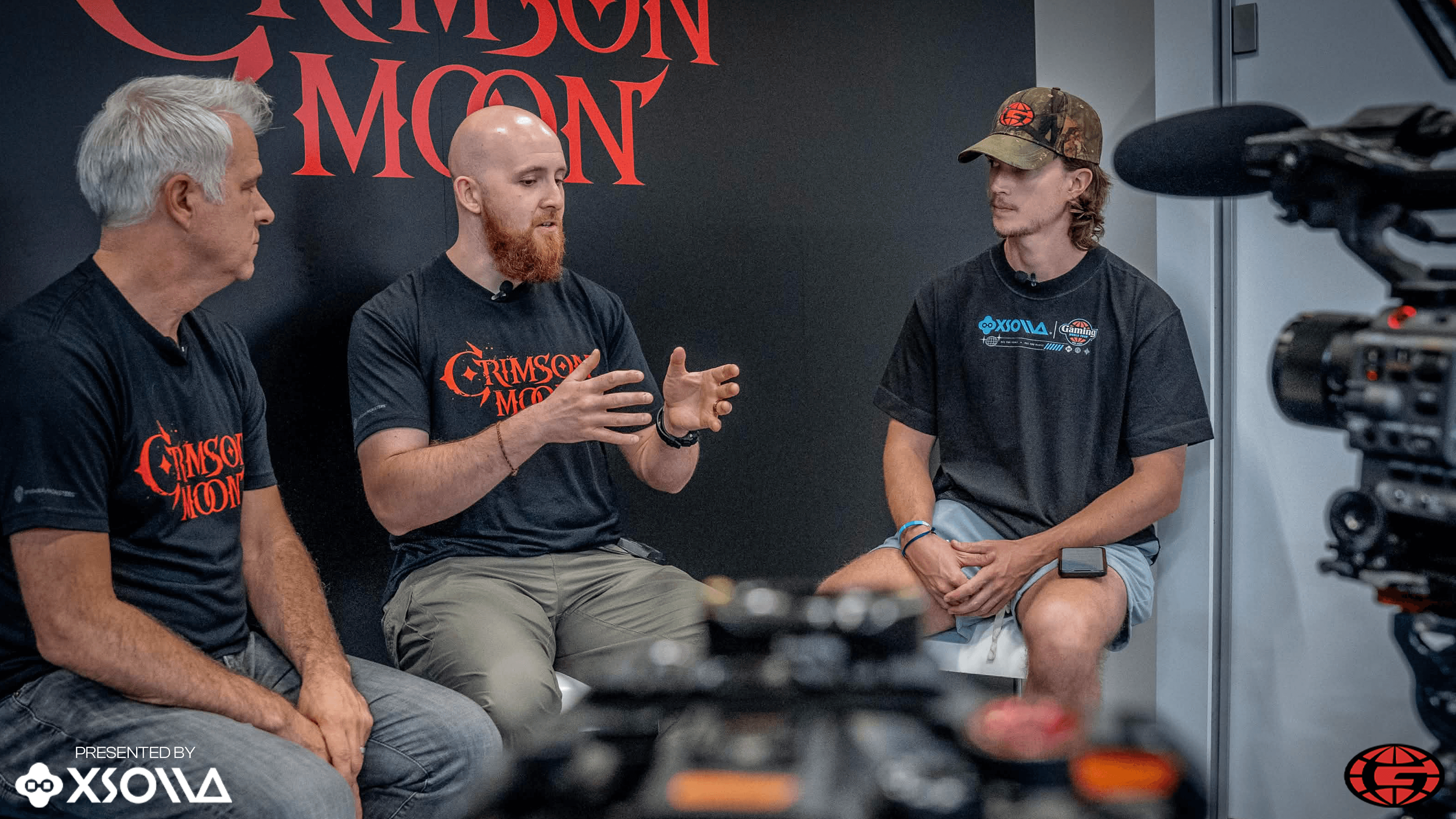
Mark Yeend and Alex Noon of ProbablyMonsters discuss the game's gothic world, hybrid progression systems, two-player co-op, and replayability.
Crimson Moon brings Souls-inspired melee combat, roguelike progression, and action-RPG buildcraft to the fallen city of Gildenarch. In this conversation, Yeend and Noon explain how the game's runs, gear, boons, hub systems, visual identity, and co-op design fit together.
The Interview
Jake Lucky: For readers meeting you for the first time, could you introduce yourselves?
Mark Yeend: I'm the Head of Growth Marketing and Marketing Partnerships at ProbablyMonsters.
Alex Noon: I'm the Community and Social Media Manager at ProbablyMonsters.
Jake: When describing Crimson Moon to someone who has not played it, how would you explain the game?
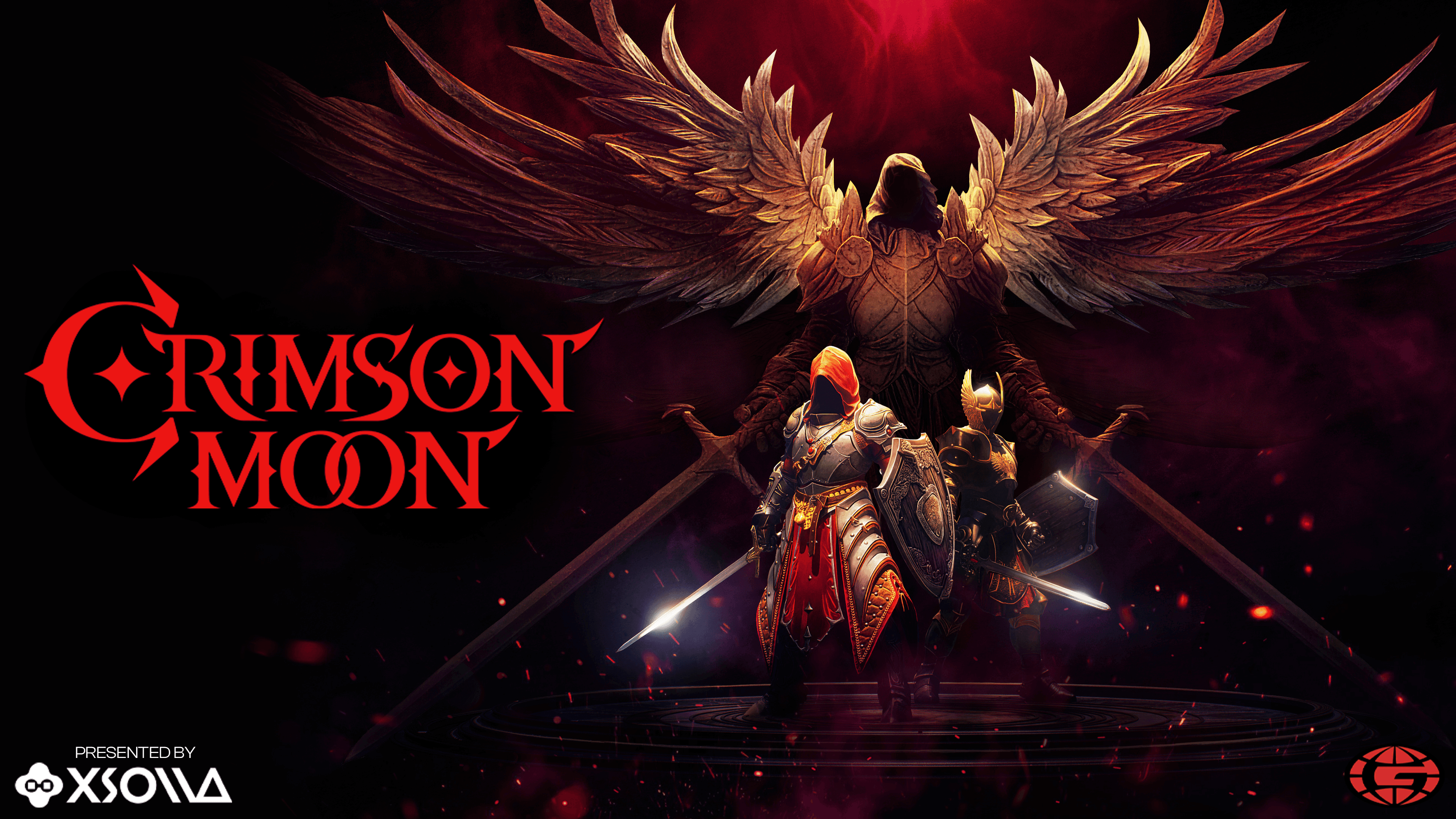
Alex: I would describe it as a gothic, high-Renaissance action RPG. You play as a powerful half-angel, half-human Nephilim sworn to the Order of the Crimson Moon, fighting the hordes of demons overrunning Gildenarch. It brings roguelike, Soulslike, and action-RPG elements together in one package.
Jake: Crimson Moon blends several genres. Which elements come from roguelikes, Soulslikes, and action RPGs?
Alex: The system underpinning the game is roguelike. As you play, gear drops and you can hot-swap it on the fly. You do not spend much time in menus: you see an item, pick it up, and immediately see whether it is an improvement. If you are good enough to defeat the boss, you can purify your gear and keep it forever. Even if you die later, you do not lose that purified gear in the traditional, punishing roguelike way.
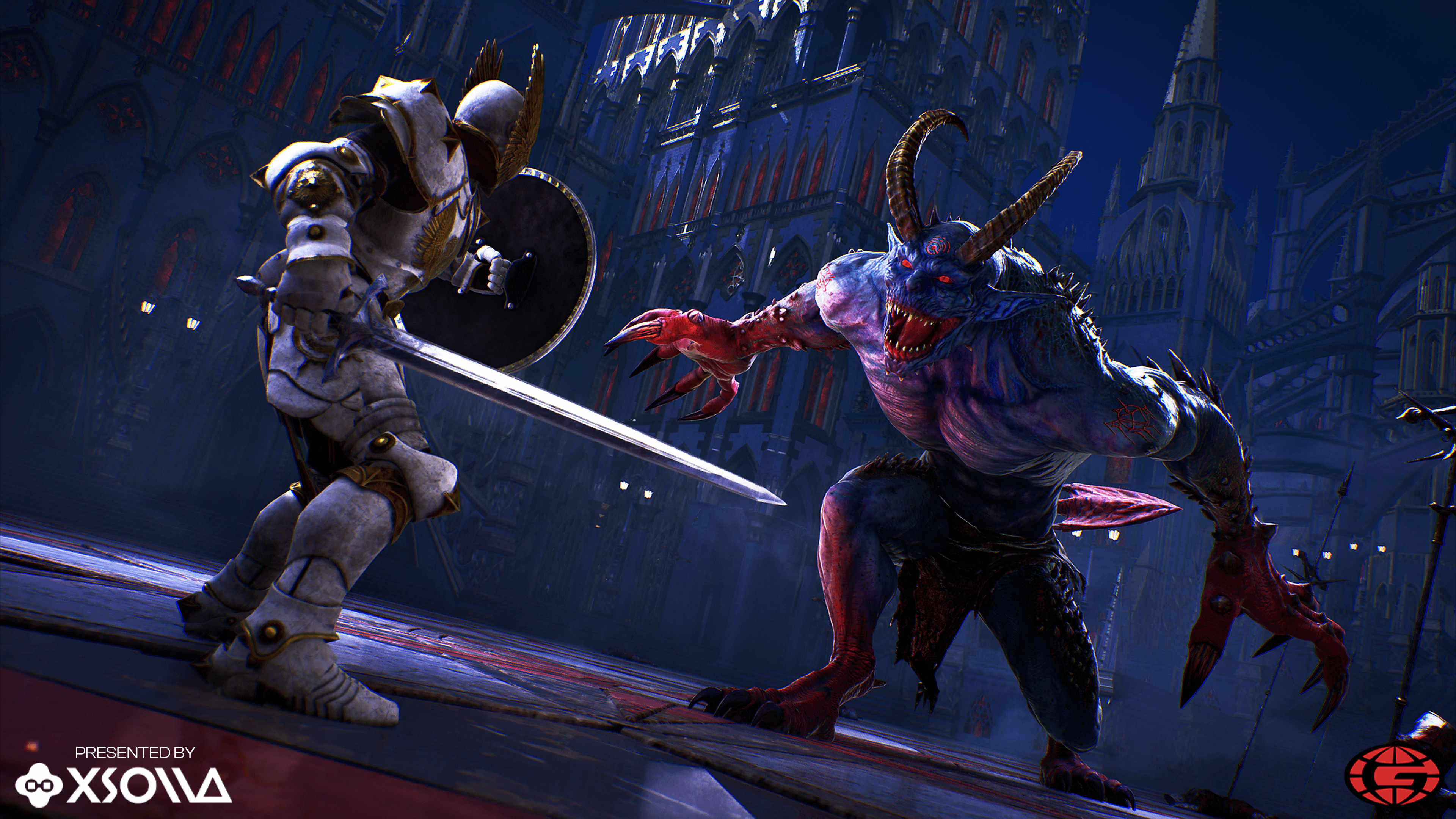
The Soulslike influence is most apparent in the combat, with light attacks, heavy attacks, parries, and dodges. We are a little more forgiving because players have multiple lives; the first death is not a true death, though you can reach one if you die enough times. The action-RPG influence comes through in the more generous stamina management. Players should not be afraid to run in, use their cooldowns, sprint, and attack. There is a slight arcade feel that gives you more freedom.
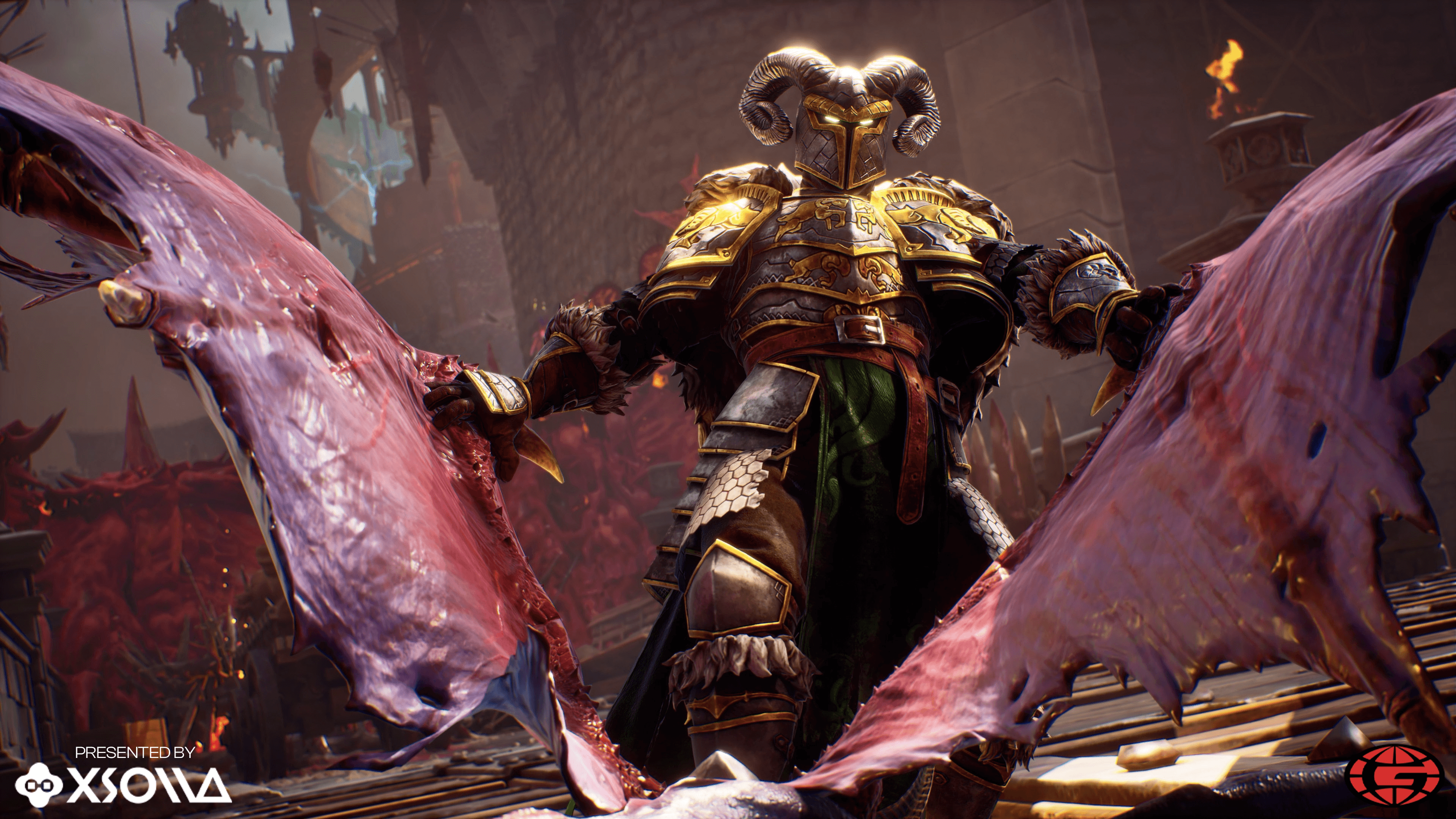
Mark: The Souls elements are in the moment-to-moment melee combat: the rolls, dodges, parries, and special attacks. The bosses are also a major part of it. They are epic and diverse, ranging from skinny vampires that are creepy and intelligent to giant, hulking brutes such as ogres. That variety is one of the game's strengths.
Jake: Can you paint a picture of the world players are entering?
Mark: Gildenarch has been overrun by Hellgrowth and decimated. It was once a glorious city filled with gothic cathedrals and beautiful architecture, but an unknown evil has killed many of its residents and forced the survivors into hiding. As a Nephilim knight pledged to serve the Order of the Crimson Moon, you enter the city to fight back.
The world is brightly colored, with beautiful sunsets and long views across the city. From balconies, the scenery can be striking. When you enter basements, windmills, and other enclosed areas, the game becomes more claustrophobic and dungeon-like. There is a great deal of variety in the environments.
Jake: What does the core gameplay loop look like, and how does it encourage replayability?
Alex: The game is divided into districts and wards. To reach the final boss, you need to defeat several preceding bosses, each of which awards an Abraxas Stone. During a ward, you pass through Nexus Gates. Each gate presents a choice of boons that can provide stat boosts, status effects such as burn or frost, or new abilities.
At the end of the ward, you fight its boss. You then return to the hub, upgrade, prepare your loadout, and head back out. As you progress, you earn gear that can be kept permanently and currency that can be used to improve it. The core objective is to defeat the three major bosses in a complete run and gain access to the final boss.
The recurring pursuit is gear progression: unlocking weapons and armor, improving items from common to legendary, and climbing the difficulty ranks. Higher difficulties offer rarer gear, so players have to fight for the best equipment.
Mark: Three components drive replayability for me. The first is co-op, because playing with different friends changes the experience. The second is completing armor sets and trying different weapons. I want to collect everything in the game, and that gives players a reason to return. The third is difficulty. Each higher difficulty level unlocks rarer gear and new achievements, so completionists can keep challenging themselves.
Jake: It sounds like players can revisit the game with different gear, abilities, and difficulty settings. Is that where much of the replayability comes from?
Alex: Definitely. In conventional roguelikes, you are often at the mercy of what drops during a run. Because Crimson Moon has a loadout system, you can enter with an effective poison-and-bleed build, then pick up an axe or frost gear without losing the equipment you already had. You can return to the previous build whenever you want. That freedom creates a lot of variety.
Jake: How much build variety is possible?
Alex: We are building a wiki to document it because there are so many permutations. Armor pieces can roll with different boons, and weapons can roll with Weapon Arts, which are special abilities. Even within the one-handed and two-handed weapon categories, there can be multiple variations.
The combinations reach into the hundreds. That does not mean there are hundreds of completely unique visual designs, but there are many distinctive armor sets and weapons, from knightly armor to bone and tribal-inspired sets and equipment reminiscent of Roman centurions. There is plenty of visual and mechanical variety to keep players experimenting.
Mark: One of my favorite moments is starting a run in basic armor and opening an early crate that contains the antler helmet. You are suddenly a Nephilim knight wearing a funny hat. It is playful until you assemble the complete set and gain all the statistics that come with it.
Jake: Sanctus Clypeus serves as the home base. What can players do there?
Alex: The war table is where you select your next run and difficulty. The blacksmith allows you to purchase equipment or upgrade gear from common through rare, epic, and legendary quality. A vendor sells consumables such as bombs and throwing knives, and there is also a historian.
As you explore the world, you can collect lore scrolls. They are not simply collectibles: gathering more of them allows Mereda, the librarian, to award you additional boons. Your build is not limited to what you have equipped. It also includes your armor, trinkets, weapons, the boons you receive from Mereda, and the boons you choose during a run.
Jake: Where does the angelic side of the Nephilim come into play?
Mark: Angel Mode is a temporary superpower with striking visual effects. You transform, glow in yellow and white, and become extremely powerful for a short period. You can cut through enemies and become almost invulnerable until the power wears off. It is especially useful when you are surrounded or struggling against a boss.
Alex: The broader angel-and-demon aesthetic comes from the inspirations behind the project. One of the lead game designers has wanted to build Crimson Moon since high school and is a major fan of classic literature, including Paradise Lost, as well as heavy metal such as Iron Maiden. The team brought those influences together to create the game's identity.
Jake: Does Gildenarch evolve over the course of the game or change after runs?
Alex: Not visually at present, though anything is possible in the future. The current form of progression is tied to access: when you begin at level one, not every non-player character is available in the hub. As you level up, you unlock characters such as the blacksmith, but the hub does not fundamentally change in appearance.
Jake: Crimson Moon can be played solo, but it also supports co-op. Was co-op always central to the plan?
Mark: Our community is very excited about co-op, especially at the game's price point. People have told us they plan to buy a second copy for a friend. We experimented with three-player co-op and other variations, but for launch we settled on two players. Playing together feels meaningful and gives the experience a distinct twist.
Jake: The game presents a dark world through an unusually vibrant color palette. What design choices helped create that visual identity?
Alex: The color palette is one of the most important choices. Many games in this genre are dark and oppressive; everything is grim, and the world feels like a horrible place. Crimson Moon still has dark demons and the Hellgrowth that has infested the city, but it presents those elements through a highly detailed, vibrant palette.
Players still feel the weight and fear of the world, but the color allows them to celebrate the gear and the spectacle. Everything looks striking. That palette is a key part of what helps Crimson Moon stand out.
Mark: It is similar to why Halloween can be fun even though it is built around scary imagery. Scary can be fun. We have skeletons, vampires, ogres, blood, bones, and spikes, but there is still a celebratory quality to it.
Jake: The fast gear-comparison and equip system is an effective quality-of-life feature. Are there other mechanics that create that same satisfying feeling?
Mark: The gear decision is immediate: equip it or skip it. Angel Mode also feels satisfying every time you activate it. It is a headline feature, but powering it up never stops feeling great.
Alex: For me, the Nexus Gates are rewarding checkpoints. Every time you reach one, you choose from three different boons. Some may benefit your current build, while others could support a build that has not fully come together yet. You have to decide which choice will shape the rest of your run.
The boons stack rather than replace one another, so by the end of a full run you can have an extensive set of bonuses and feel ready for the next challenge. If you die, you may not see the same option again until it randomly appears. Players can easily focus on tangible equipment, but a strong stack of boons can completely transform the way they play.
Jake: Who is Crimson Moon for?
Mark: It meets people where they are. Many players feel squeezed by both their budgets and their available time. As a dad, I am very conscious of how much time I can spend gaming. Crimson Moon is a Soulslike game that respects people's time. You can play for 15 minutes or four hours in an evening, and you can spend one hour a week or dozens of hours exploring its replayability. You can approach it in whatever way fits your life.
Alex: It is also for gear-focused players who love min-maxing. They want to find a powerful combination, discover how to exploit a system, and melt a boss. Crimson Moon has a great deal to offer players who find fulfillment in that kind of experimentation.
Mark: The game should create strong streaming moments as well. Boss battles have wild visual effects and satisfying victories. Co-op naturally creates funny, emergent moments as players carry, tease, or grief one another. The shared loot pool adds another layer, especially when one player decides to open a chest before reviving a friend.
Alex: If your friend is a loot ninja, there are going to be some battles. Someone will run to the chest and say, 'I'll revive you in a minute.'
Thanks to Xsolla for sponsoring our Gamescom coverage this year. Xsolla works with developers around the world, giving them tools and support to launch, monetize, and grow their games.
This year, Xsolla had a scholarship program that flew 20 indie devs from across the world out to Gamescom, giving them the opportunity to showcase their games, meet the industry, and get their projects in front of more people.
Share this story
