
Inside Guns of Eschaton
Eschatology Entertainment's Eduard Malykh on building a Souls-like FPS, weapons that can turn on you, and the dying West that Viktor Antonov finished before his death.
Eduard Malykh: I'm Eduard. I work for Eschatology as a head of game design. I work on this project for four years, so the whole production time, I think, except for prototyping. And we are here to show our game and to speak about it. We like it a lot, and I hope you will also like it a lot.
Jake Lucky: It's a good one. We are a big fan of shooters, and especially when you tie in all of these aspects to it. But how would you go about describing this game?
Eduard: This is very easy question for me. This is a reactive shooter we want you to play. This is the shooter where we build the system where you need to think first and act second.
So if you just dive into this game and start shooting as you're used to do in different games, you will die quite fast. And as soon as you understand that wait, find the time, and find the spot, and find the tool, you will do great and you will crack every encounter easily.
And that's the design ideology, design idea we have while creating this game. It started from this idea, how to combine FPS with Dark Souls system. And Dark Souls is reactive type of gaming. So you learn the enemy, and you act when you have opportunity to act. You just cannot rush into Dark Souls pressing buttons.
You need to think. You need to step back. You need to parry. You need to dash side, and then act. This is what we are trying to do in this shooter, and I think we succeeded.
Jake: I can speak from a very short experience that you can't just run and gun in this kind of game. You have to learn and study your enemies, and I'm excited to play more. And obviously I'm dying to, not even bosses...
Eduard: Oh, you did great.
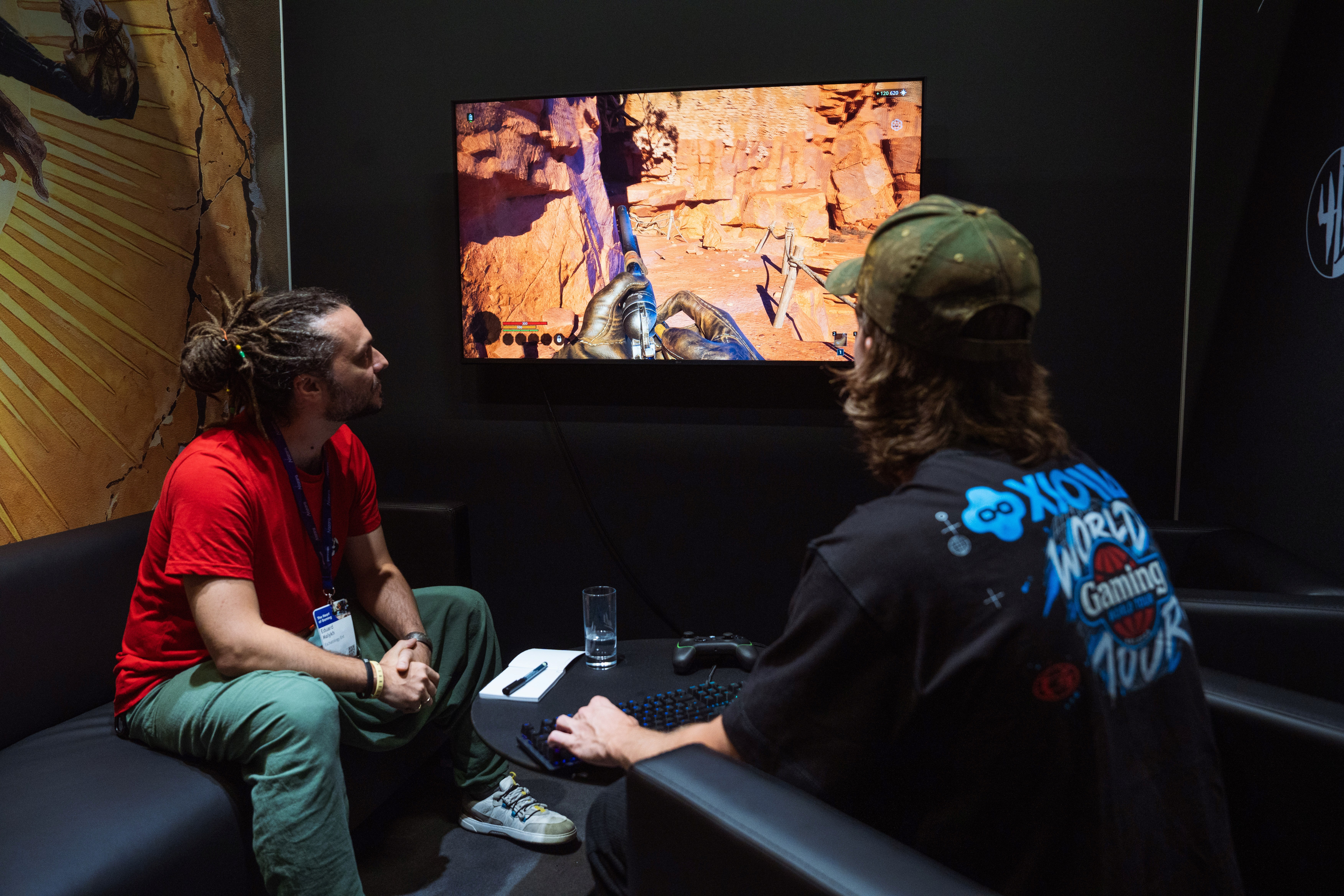
Jake: I try my best, but it's unique, and you guys of course call it unique in the fact you say it's the world's first FPS Souls-like. So where does that original idea stem from or come from, where you guys get together and say, "Okay, we're gonna do FPS, but with a big twist"?
Eduard: Exactly like you just described. Our creative director and CEO, Fuad, he was just sitting with our CTO and they were just thinking how to combine FPS and Dark Souls. That's it. And they created a prototype. They tested it. They decided it is good. They showed it to some people, and it was great.
And that was the initial idea which transformed into what you see right now.
Jake: And for those who haven't seen the world or even had it described for them, how would you describe the world that you're gonna immerse yourself in as a player?
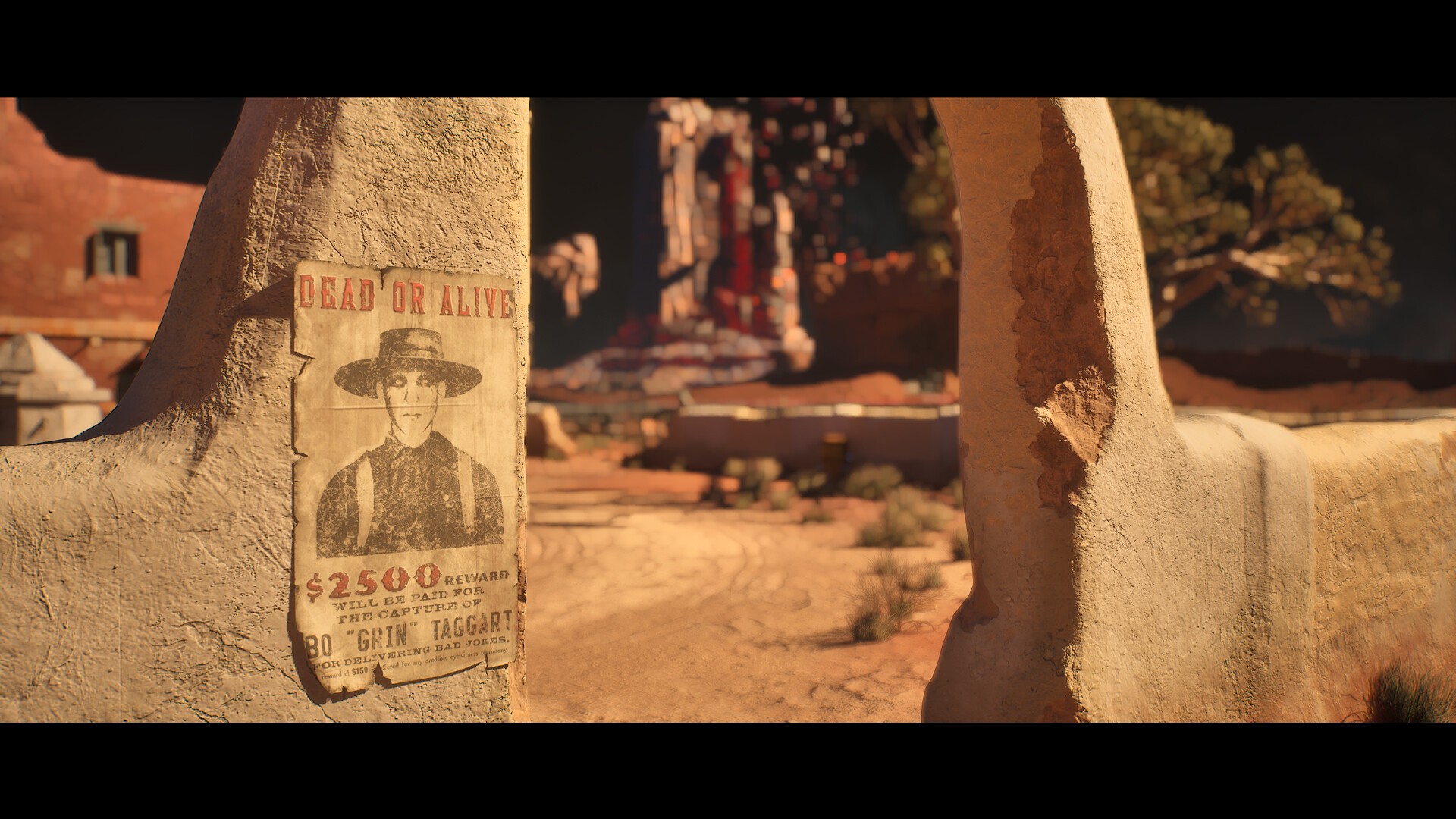
Eduard: Dead Western, like mystical Western. You're playing, the apocalypse is happening right now.
And the important thing here that it is daydream horror. So nothing is covered with dark. You see everything, and that's why the horror which is happening around influences you even more because you see how it's burning. And the burning is not just a word for our game. This is the narrative ideology.
So the world is burning right now, and you are burning with it, and you are to decide how to proceed with this world, how to act, and what would be the result of your action.
Jake: And I know you don't wanna reveal too much as to what these players are playing through and what their probably end goal is. But for those who are diving in, dropping into this world, what is somewhat of the objective or somewhat of the story that they're falling into?
Eduard: This is a really spicy question for me because I don't want player to know anything for now. But let's say that...
Jake: You're a gunslinger.

Eduard: You are a gunslinger on the West. On the Dead Western. You are moving and retracing the path in this world, and you are moving from the West to East, from the East to West. I will make it a little bit puzzle here.
Jake: You're a gunslinger. You're moving East to West. It's difficult 'cause obviously I wanna give an inkling, but I totally understand from your side it's like, no, I want them to play to understand what they're going through. But this is also...
Eduard: I understand that everybody wants to know more. But really you don't want to know the narrative details here because it is great and we have quite a deep narrative which, for example, me is amazed of, and it could cover in itself a lot of stuff.
Jake: But this is also a product that's been touched by a lot of great hands and still obviously being worked on towards launch. Viktor Antonov also, the last product he touched, the late Viktor Antonov, can you describe to people what kind of impact he had on this game earlier in development?
Eduard: It's his world. As I told you, Fuad, our creative director, created the prototype and shortly after that, he contacted Viktor, explained him the idea, showed him what he had, showed him the idea of the terrains you will have in our game, and the world we want to build, and Viktor just told that, "Okay, I'm in."
He was a co-owner of the company. He created this world. The visual stuff of this world is his. He finished this world totally and we were into some more stuff. Unfortunately, he passed, but yeah. I cannot even tell how much of him is in this game. This is his world.
Visually, it's his world. Even a lot of gameplay stuff was designed after we find visual solution for something, we start moving with direction and create a lot of different enemies and different mechanics for those enemies.
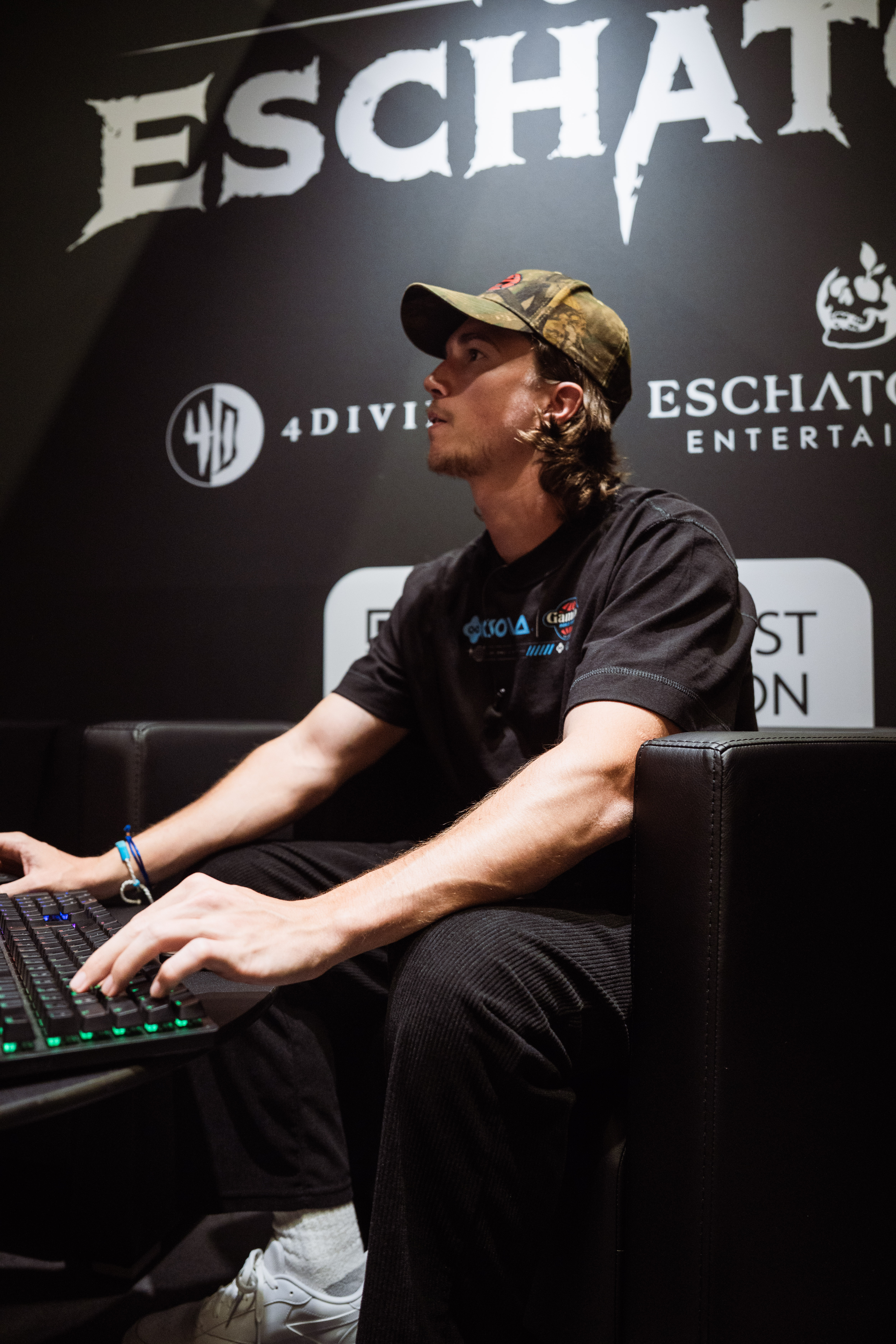
Jake: And I know that in every single trailer you guys have had so far, you paid homage to Viktor, and obviously with the name and everything. Are there any ways in the game you guys are paying homage to him that players can expect?
Eduard: Yes.
Jake: That's awesome. I think one of the big hooks for me, and obviously outside of Souls-like FPS is a pretty big hook, you're like, "Okay, I'm curious in the very least." You guys also preface that your own weapons can kill you. Can you describe the weapon system and how people need to really be careful about taking care of their weapon and how that all works?
Eduard: The game is happening in America of 19th century, and there was a reason why we selected this period of time because of the weapon. One of the reasons, because of the weapon. We love how they work, and we love how they look, and we did every weapon with huge amount of details, by paying a huge amount of attention to the details. And every weapon working in a way it's supposed to work in real life. And of course, when you shoot with a, for example, elephant gun, the hugest rifle they had in this time, you should be careful.
And of course, we are playing a game, and we are playing in mystical environment. Some of the weapon will have mystical powers. For example, after killing the boss, you will unlock weapon which has real-life representation, but on top of it, there is mystical gameplay. We want it to be there. And you need to harness and control those weapons.
For example, if there is a demon inside this weapon, you need to somehow learn how to use this weapon because it's very powerful. But you need to learn how to use it. It's not very convenient.
Jake: Interesting. That could be one of these. I'm sure you have many. What would you say is one of the more unique or standout points in this game that you find?
Eduard: I think the base gameplay you just saw. The idea of you waiting for the moment and reacting in a shooter is quite unique and, like the core gameplay of our game. And I think you will like it.

Jake: And we're talking about FPS and shooters are so common, right? There's a reason why it's such a popular genre. How do you guys come together as a group and say, "Hey, how are we gonna stand out in a sea full of so many other FPS games?" Obviously you guys have thought of this, of how to stand out.
Eduard: Because of the approach we want to create, because of the experience we are giving in our game, as I told you, you need to think before you shoot, and that is how we are going to stand out.
Jake: For the dev side of things, of the features that you can mention, what was something that was maybe tricky to put into the game or difficult to put into the game?
Eduard: I think the magic system. I think the magic system because we are shooter game, and we are Souls-like game. And in Souls there is always a magic system which is a side of what you are doing.
In Dark Souls for example you smashing and hitting with your shield and sword, and magic system makes your gameplay different. And we wanted to leave it in our game as well. But we are shooter, and we integrated our magic systems, we have three of them, and each of them are integrated in shooting itself.
For example, if you go to the voodoo path and select voodoo magic, you use small gris-gris, which is bags of something with mystical powers. You throw them and they apply AOE damage. And you need to shoot them to make them effective. So you throw something and shoot it. If you go to the reverent path, which is sacred magic, you enchant every bullet, every chamber in your revolver and you select which enchant to activate in which situation, and dependent on you just shoot or you killed an enemy, different effects will apply.
So you choose the magic, but you still need to shoot a lot. And the combination of these two stuff was very challenging. And I think we succeeded.
Jake: What was it like balancing the weapons versus the magic?
Eduard: Because of the approach we've chosen, you need skill to shoot and still to use weapons to do the magic. It wasn't quite difficult. We just balance everything into common ground and calculate a lot of stuff.
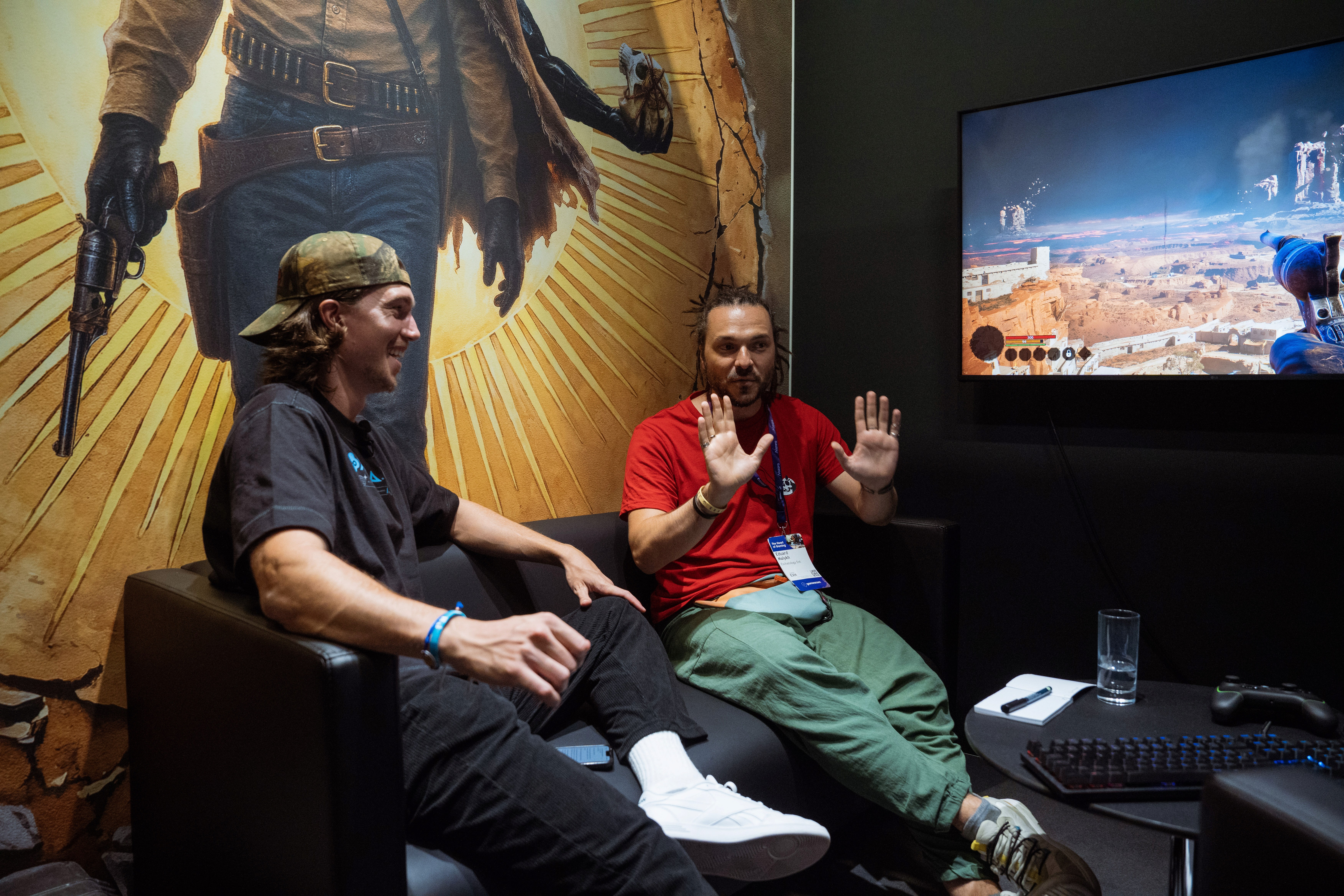
Jake: So is it weapons are still the primary and like you said, magic is a side, or can users utilize magic enough where you said it's very balanced where they can use both very effectively?
Eduard: Yes, but you still need to use weapons to use magic effectively. So there is no direct answer for this. You just cannot choose magic or weapon. You still need to shoot to use your magic.
Jake: Do all the types of magic then integrate with shooting somehow, some way? Not just the voodoo one?
Eduard: Yes. For example, voodoo magic, you can throw bags of some stuff and they apply AOE with some effect.
Jake: But you have to shoot them.
Eduard: To resolve this effect, we need to shoot someone inside that area.
Jake: So the other types of magic interact in similar ways.
Eduard: Yeah. For example, you shoot a gris-gris, this small bag of something magical, and every enemy inside turns into ricochet object. And if you're not shooting, they turns into ricochet object and that's it. But if you shoot, each of them will receive a bullet which will bounce over every enemy inside.
So you need shooting to utilize the magic.
Jake: So we're gonna see some interesting combinations then.
Eduard: Yeah, the combinations are insane.
Jake: My last one for you is when you guys are making a game like this that's an FPS Souls-like, who do you think the game is for?
Eduard: We were trying to cover both shooters and FPS player, and Souls-like players of course. And that was the tricky stuff to achieve.
Jake: I'm really curious if it'll take with the Souls-like community, 'cause they're not used to using guns in most scenarios.
Eduard: That's why we have, for example, parry. I hope that every Dark Souls players will learn very fast the parry system. And if you successfully parry an enemy, you activated bullet time as you saw. And you slowly aim and shoot. It is enough. Just be patient and parry.
If you want to shoot a lot, just shoot with sequences. You still need to think where to shoot, but you can do it without parry. Just shoot with sequences. And different weapons have special abilities, not like mystical, but for example, revolver you are playing with, when you press special ability button, it transforms to firing state, and you can shoot very fast without cocking the weapon. So if you're a fast and precise shooter, you can go this way and shoot everybody quite nice, but you need to know where to shoot.
—————-
Thanks to Xsolla, who helped us connect with devs for part of our Gamescom coverage. Xsolla works with developers all around the world, giving them tools and support to help them launch, grow, and monetize their games. But one of the biggest reasons why we wanted to partner with them is because they invest back into their devs. This year, Xsolla had 20 different developers flown out to Gamescom to help them connect with others, allowing them the opportunity to showcase their game, make important industry connections, and all in all, get their game in front of more people. And that's the kind of support I love to see for developers, and especially indies out there. So again, a huge thank you to Xsolla.
AUTHOR
Share this story


