

Inside Tom Clancy's Rainbow Six Tactics
Ubisoft Paris game director Martial Potron on turning Rainbow Six Siege into a turn-based game, why destruction changes everything, and shipping with no microtransactions.
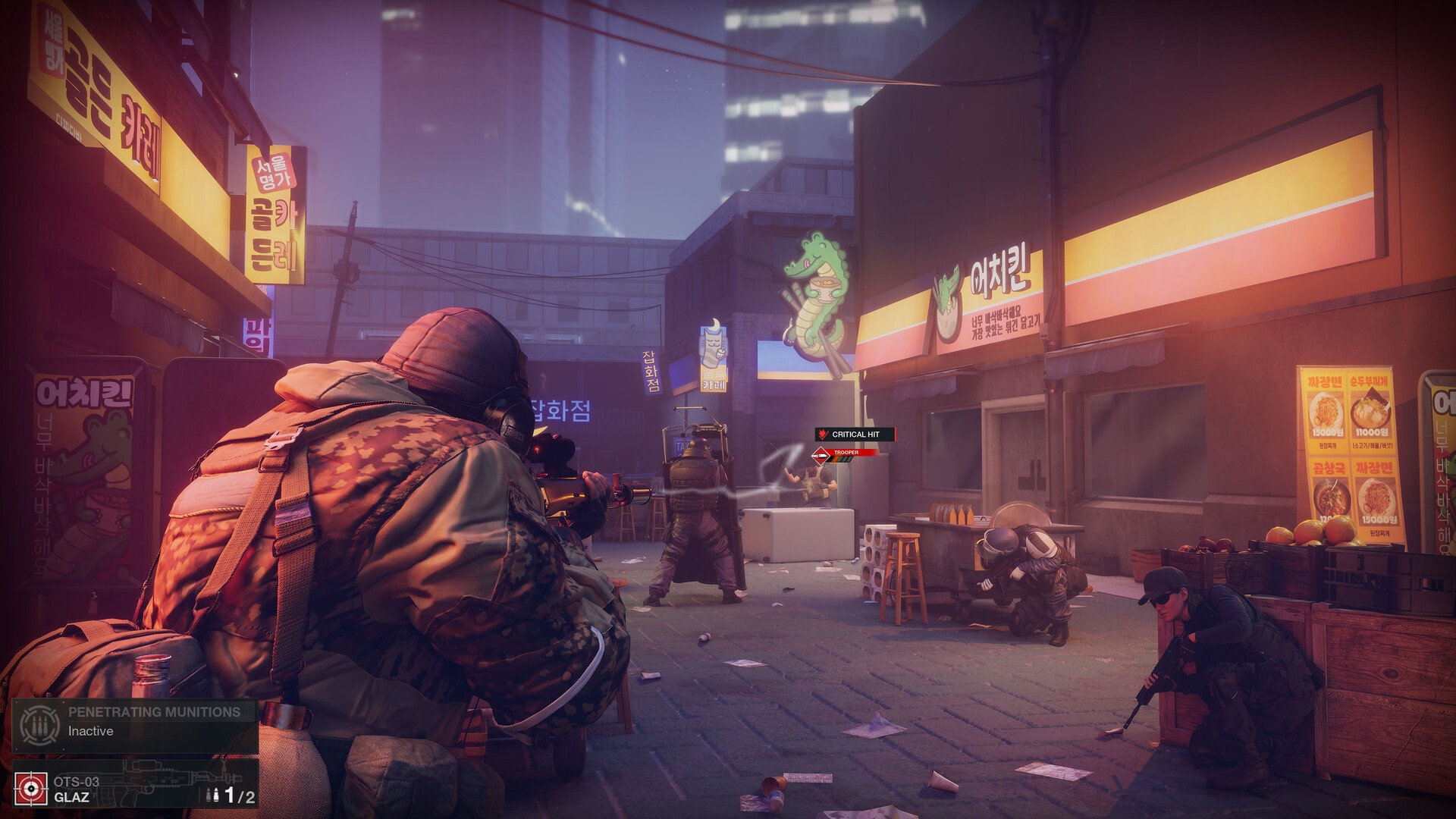
Martial Potron: So I'm Martial Potron. I am the game director on Rainbow Six Tactics. It's a single player turn-based tactical game set in the universe of Rainbow Six Siege. Basically it's a turn-based game, so you have like a tactical phase in the game where you send operators in missions all around the world, and you play in turn-based fashion, with a few unique elements coming from Rainbow.
You saw them, the Grim, unique operators, destruction. Everything in the environment is destroyable, as well as recon and fog of war things. And then operators come back at the headquarter, headquarter that you have to rebuild. You know, at the end of season 10 of Rainbow Six Siege, Rainbow has been disbanded.
Air Force Base has been destroyed. Six has been killed. So you are the new Six. You need to rebuild Rainbow from the ground up. You need to recruit new operators, train those operators, so very strategical layer, but also investigate a global conspiracy, a very Tom Clancy fashion.
Jake Lucky: And for more traditional Six fans or, you know, FPS fans who saw it and were kind of shocked and were surprised to see a turn-based game come out of you guys, what's the decision behind, "Hey, we wanna make a turn-based game that kind of leads and expands on that universe"?
Martial: There are a few things, but the first one is that Rainbow, its DNA is tactical. It's very tactical. All of the elements, you know, it's line of sights, finding the best line of sights, prioritizing the best targets, finding the best cover. So for us it was just giving a different perspective so it's not from the eye of the operator.
It's not the eye of the player. It's more the eye of the commander. It's not the same pace. It's not a real time game, but it becomes a turn-based game. But overall the ingredients remain the same.
What is important for us, and since the very beginning, we involved the Rainbow Six community, being the pro players, being the influencers, being normal players. At every stage of the production we involve them in workshops, in play sessions. So we really made sure we gathered feedbacks, we gathered their opinions. We worked together with them to really understand what they imagined being Rainbow, and how to turn this game into a turn-based game that would please this community.
Jake: How long has it been since the first inception of this idea? How long has it been behind closed doors?
Martial: We started in '22. Really from the beginning, even before having the game being like a tangible thing, we already started having community workshops. But every year I think we had people coming in Paris, both from the tactical scene, you know, like tactical modelers, casters, from the tactical scene, and Rainbow people.
We had quite known names. If you look at X, you will see a few known people.

Jake: And like you said, there's a good amount of crossover between Siege and it being a tactical shooter and how it fits into a turn-based game. What element do you think transfers over best that still feels like Siege but also works so well in turn-based?
Martial: I would say destruction. Destruction because it exists in few other tacticals, but it's so much of a pillar, you know, in Rainbow Six that for us it forced us to really embrace it entirely. You need to be able to destroy everything using Ash with her CREM grenade launcher.
You know? It's so necessary to be able to blow every wall, every cover, so it changes everything because in the tactical, usually when you are behind the cover, this is the moment you are safe. When an enemy is behind the cover, this is the moment you are forced to flank. In our game it changes everything.
It changes the perception of safety-ness. You know, you have to understand that enemies... You can be creative when it comes to creating new line of sights. We can destroy walls, and so enemies who think they are protected over watching doors and things, in fact, you can totally surprise them from behind because you can create new entry point, new line of sight.
But it goes both way, you know? So sometimes you feel safe. Things are not going very well, so you start protecting yourself using high covers, using overwatch. And then the enemies arrive with a grenade launcher, rocket launchers, and you are like, "Oh, shit," and everything goes astray. It's fantastic.
Jake: Is the destructibility between Siege and Tactics nearly the same? Are there any differences?
Martial: Technically, it's not the same because we are not using the same engine, but overall, it's a bit the same, you know? You are using a shotgun, so you can pierce things, but you will not pierce the same as using a grenade, using a breaching charge, or using a sledgehammer, for instance.
Jake: Is there anything that Tactics players can do that you can't do in Siege? And I know we're talking about a little bit of different games, but...
Martial: I think we stretched a bit some operators, or some perception about what is the core of a Doc, or what is the core of a Nokk. For example, we really wanted to make Nokk a bit more stealth-oriented than in Siege.
We wanted to make Doc a bit more support-oriented than Siege. So sometime we took some freedom to, let's say, refine or translate them with our vocabulary. So yeah, sometime it's more extreme in our game.

Jake: What do you think that longtime Siege players will really enjoy and get a kick out of transitioning from that to this?
Martial: From everything we saw when we had late session of play test, you know, every three months approximatively, we have one play test. And for play test, it's 50% of the population being tactical enthusiast. 50% are people who never play tactical but who play Siege. So the learnings are very different.
So tactical, they are looking at the agencies, the turns, the pace. When Siege, they are learning about what turn-based game means, what line of sight means, et cetera. So it's a bit different, the learning, but it helps us shaping those things. What we really saw is that they were enthusiastic with this stuff.
They just need to learn a bit the different things. It requires you to take your time when usually you do not have the time, in fact, to take your time in Siege. You need to make fast decision. In our game, you need to make the best decision. It's the same questions, but with a different time space.
So it forces you to be patient. Me, for example, I'm very bad at being patient.
You know the breach, for example. You saw the breach. So it's a way to synchronize all your operators to enter a building and take your enemies by surprise. So it's really deciding where to recon, like finding the different enemies, and then deciding how to reach those guys. So creating breaching points with breaching charge, with the jammer, with Ash, CREMs, et cetera. Then deciding who enters, where they go, and which gadget they use, which skill they use. So you take your time to decide how you want to enter this phase.
I think it's core in the DNA of counter-terrorism fantasy. Here we are really pushing it to the maximum, to the limit, having very cinematic moments where, once you press execute, it happens. What is cool is that I think everybody understands it. It's just that finding the energy, you know, to really fine-tune this stuff, take the best decision to really surprise the enemies. Make the best out of what you call operators' capacity, you know?
Jake: No monetization. No micro-transactions.
Martial: No, exactly.
Jake: Was that an easy decision to come to?
Martial: Quite easy, in fact. We really wanted to make the best single-player game we could, and so it came really with being as sharp as possible. And to do those decision exactly like no cooperation, for example. There is no multiplayer modes. We really want it to be as sharp as possible to deliver the best experience we could for players.

Jake: 15 operators are coming from Siege to Tactics. Firstly, how do you guys narrow it down to such a thin list?
Martial: That was tricky. And I must say, me, those are not my favorite operators from Siege, but I think they are the ones who fit the most with the core gameplay of what we delivered.
We have good breachers, good flankers, good supports, good shielders, et cetera. We really needed to find which ones will be the most iconic, the most unique, but also synergize the best with the other operators, as well as contouring the best all different archetypes.
Jake: And then when you're doing these missions, when you're taking these actions, you're also taking turns with all of your characters, with all of your crew. And I think a unique aspect of that is you guys are also then enacting that with a cinematic. So you take the turn, then you have a nice cinematic that plays out your turn. I'm just curious, how many cinematics do you guys have to make for the different choices?
Martial: For the breach, when you synchronize your operators before entering a place, it's fully procedural.
So which means we don't have, we have cinematics to dress up Ash using her CREM, or Mountain blowing a door or some stuff like this. But what was interesting that basically you are setting up 12 action because you are four operators. They can make up to four entry actions, blowing doors, blowing windows, et cetera.
Using four gadgets as well as using four skills, entering, shooting. But everything is sequences being put one after the other. But I know it's really filming the core gameplay, in fact. So it's not fake things. It's what you set it up that is being played.
Jake: For you, what is your personal favorite part about the game?
Martial: Destruction. Destruction. I love the destruction because it really changes the way I consume tactical game. You know, it put myself at risk. I can really be creative about the way I want to solve a situation. Not having just to flank, find the best line of sight. Sometimes I create the line of sight.
Sometimes they create the line of sight when they feel safe. So it's really changing the basic level of the experience.
Jake: I'll leave it on this. As a team, what was the most challenging piece to put into a turn-based tactics game?
Martial: Technically, it was the breach, the realization of the breach. So this one, it was incredibly hard because we needed to find a system that will analyze all the action of the player, all the reaction of the enemies, and make it to cinematic, so it's super complicated.
Gameplay-wise, now we'll say destruction was complicated, because it changes the way you balance a tactical.
This interview has been edited for clarity and length.
Thanks to Xsolla for sponsoring our Gamescom coverage this year. Xsolla works with developers around the world, giving them tools and support to launch, monetize, and grow their games. This year, Xsolla had a scholarship program that flew 20 indie devs from across the world out to Gamescom, giving them the opportunity to showcase their games, meet the industry, and get their projects in front of more people.
AUTHOR
Share this story


