

Inside Warlock
Jeffrey Hattem, Creative Director on Warlock, discusses Kaatri's journey, the magic system, the D&D connection, and why they want players to break their game.
Jake Lucky: When it comes to a career in gaming, what was one of your first memories?
Jeffrey Hattem: I worked at Ubisoft a long time ago. The first project I worked on was a Batman game called Batman: Rise of Sin Tzu, and I was super excited and jazzed to be working there. We were just two or three people at the beginning of the project, and my programmer had Batman doing a grappling hook swing. The first time I saw that I was like, 'Oh my God, this is so awesome.' I still remember that. I saw the programmer who did that today at Gamescom, and I reminded him of that memory. That was 25 years ago.
Jake: And so how do you find yourself now, much later in this neck of the woods?
Jeffrey: I'm a gray beard now, obviously. But working with a great team of talented devs in Montreal working on Warlock, and super excited about that.
Jake: For those who have seen the most recent trailer but maybe don't know the D&D ties, how would you describe Warlock?
Jeffrey: If you're a rookie to D&D, that's great, because this game is made for you as well. We're making it for people that possibly don't know anything about Dungeons and Dragons, but if you're a fan of D&D, you're gonna recognize a whole bunch of stuff, like monsters and spells and locations and whatnot.
Jake: When a player dives in, can you set the scene and paint the world of what they're going into?
Jeffrey: Warlock is a third-person single player action-adventure that puts magic really at the core of the game. You play as Khatri. She's a seasoned weapons master on a quest to find someone that's personal to her.
Jake: For the D&D people out there, when it comes to Khatri and Tasha, what's the through line there?
Jeffrey: What makes a warlock is the pact. To aid her in that quest, Khatri seeks out Tasha and they make a pact together. It's that dangerous bargain that makes Khatri a warlock. Sorcerers or wizards spend a lifetime of worship to divine beings or studying in books. Khatri takes a shorter path. It's a shortcut, but it comes at great cost.
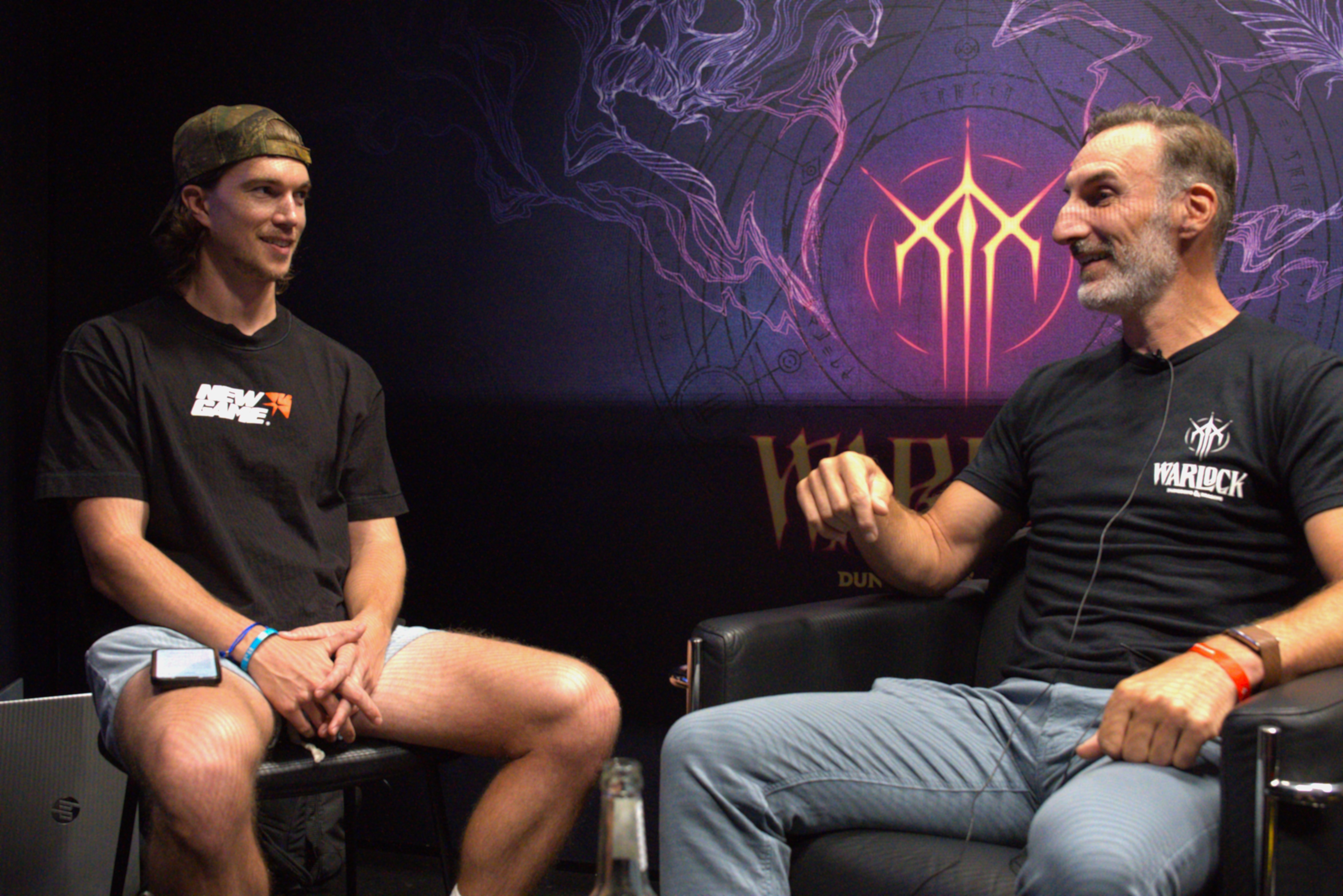
Jake: Throughout this story, are we gonna find out more about the relationship and maybe the niceties of it and the not so niceties?
Jeffrey: For those not familiar with Dungeons and Dragons, Tasha is a known character in the universe. She's a very powerful being, a storied character, and that's why Khatri seeks her out. That's how the story begins and that's where it takes us.
The relationship between a warlock and a patron is tight. It comes with strings attached. But Khatri is not too worried about the strings. She's just 'To hells with the costs, I'm going in,' and she'll figure that out later. That's the character she is.
Jake: You guys went with a third person action adventure single player, which might not be what people would see as the traditional genre choice for a D&D through line. Why go with this?
Jeffrey: Dungeons and Dragons is the game of ultimate player agency in my opinion. You could do a lot of different gameplay scenarios and campaigns. So when we thought about how to bring the warlock player fantasy to life, we wanted to focus. And for us, the focus was around the core magic, the magic systems, and how you could have that player agency that makes D&D so special and bring that into a real time action adventure game.
Jake: Was that always from inception, or at what point did that become what you were going with?
Jeffrey: We explored different ideas, but we're a very core mechanics, core gameplay driven studio. We started thinking about the magic in Dungeons and Dragons and where that could take us, and all the connections that are made between the ingredients, the monsters, the locations, the spells. That was really appealing from a design standpoint.
But then emotionally, warlocks in Dungeons and Dragons have insanely high charisma. And so you take pause and you wonder, what kind of ordinary person can travel in the world, go toe-to-toe with one of the most powerful beings in the multiverse of Dungeons and Dragons and ask them to give them magic and get it? That's a story I want to tell, and that's what we're doing now with this game.
Jake: She's a bit of a weapons specialist but also being infused with this giant magical power. How do you guys find a way to balance it for players who just wanna swing a sword versus players who want to use the magic?
Jeffrey: The reality is that we're trying to not over-balance it, because we want players to play their own way and be expressive with how they want to play the character. She's a Pact of the Blade warlock, and that means she brings her background as a seasoned weapons master to the fray. So combining her newfound abilities with magic and her blades, if players wanna use more melee attacks, they can do that. If they wanna be more crafty with the magic, they can do that. We're trying to make it as flexible as possible.
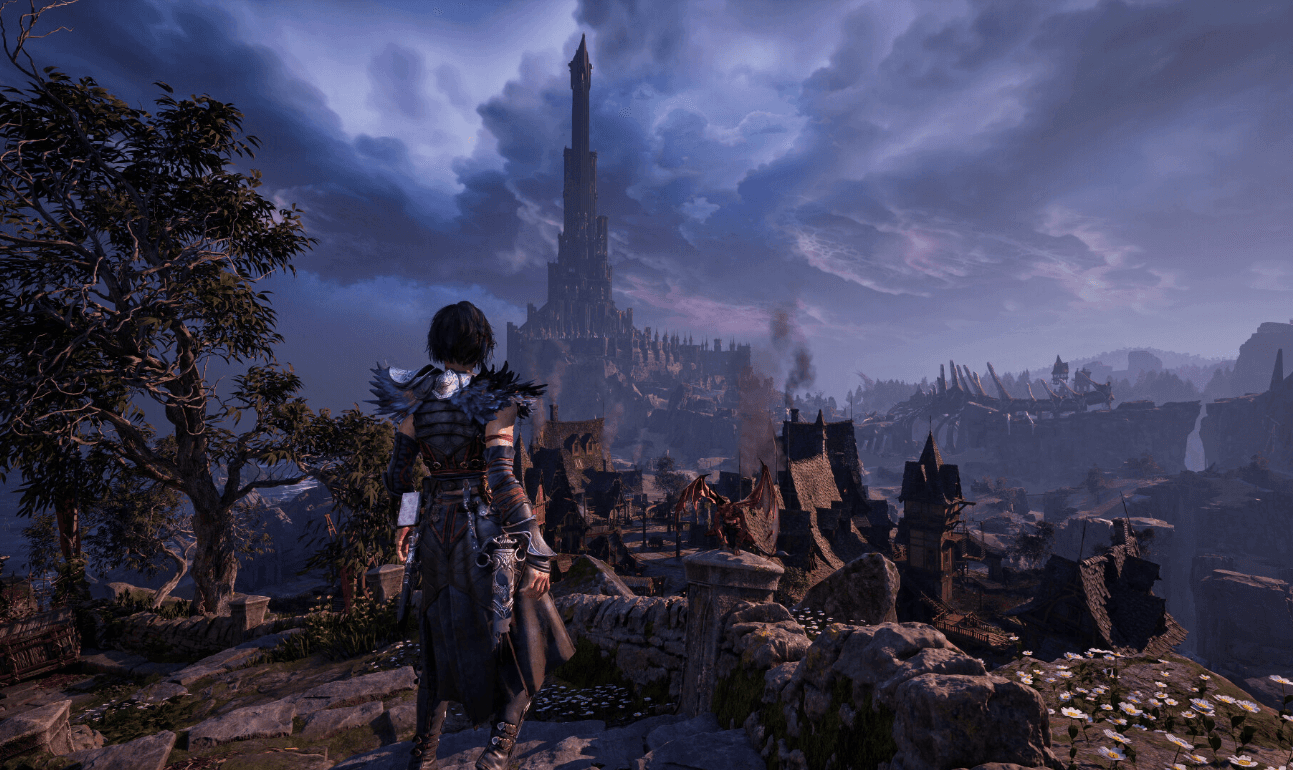
Jake: We've only seen a few of the spells you showcased. Will there be many spells that you condense down to a kit, or is the kit going to be a set number of spells?
Jeffrey: With the gameplay reveal we've shown 10 spells so far. What we tried to show with those was the connections between the spells and the world and the ingredients and the damage systems. As you progress as a warlock, you'll be able to grow your spell kit, get more tools in your toolbox. But what Tasha brings that's special is that you can also modify the spells you get and tweak them in a way you like to play with them.
Jake: When it comes to the base inception of the spells, one of the cooler parts you showed us was the interactability between combat but also interacting with the environment. When you guys thought of these spells, was that a piece of it? That you want them to be cool in combat but also serve another purpose?
Jeffrey: 100%. When we were thinking of which spells to incorporate from Dungeons and Dragons, we asked ourselves, 'Can this be used to traverse terrain? Can it be used to solve puzzles? Can it be used to fight monsters?' And when the answers were kind of limited, we were like, this might not be the right spell to include. So we're trying as much as possible to get spells that can be used in many facets and allow players to really express themselves creatively.
Jake: Is it most spells that will have a use beyond just combat? Is that the idea?
Jeffrey: It is. Yeah, it is most spells.
Jake: When it comes to parallel games out there, obviously what Baldur's Gate has done for this kind of genre is quite expansive. How do you guys plan to stand out?
Jeffrey: Baldur's Gate, great game, I love it, played a lot of it. It's a completely different game from what we're doing. We're trying to immerse players in a character, take them on the warlock player fantasy and the journey Khatri's on. We wanna stand out with the magic, the core magic system, how it connects to combat and gameplay. That's where I think the game shines.
I don't think that many games really encourage players to break the game. And we're trying to find ways that the game can support players doing stuff that's crafty and clever and that surprises us.
Jake: Can you give the people maybe a short idea, even just from what we've seen, of some examples of what they can do with that magic?
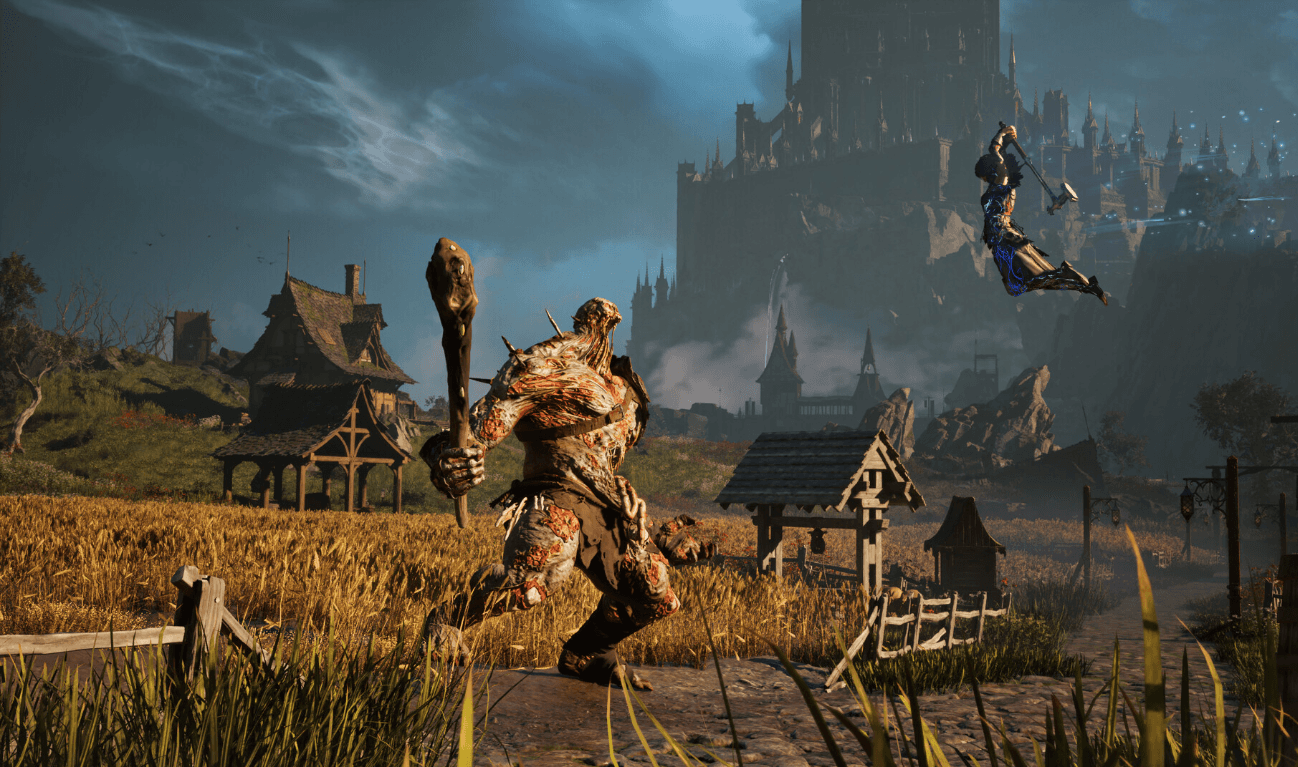
Jeffrey: Black tentacles is a great example. When we started thinking about implementing it, it was a cool crowd control ability where you could grab monsters. But then we said, why does it just grab monsters? Maybe it could grab objects too. So we added that. And then we said we need to find a way to throw objects at it. So you can remotely cast black tentacles on pretty much any surface, take pretty much any object of a certain size and chuck it in there, and then you could jump on it.
Those are examples of things players were doing that surprised us, and we're trying to support that as much as possible.
Jake: I like how you showed us, in typical magic spell fashion, fire is involved and usually you burn down a gate to go through. Then you took water off the ground to quench the fire. But usually that's where it ends. Then you can also pick up that water and throw it elsewhere.
Jeffrey: Yeah, for sure. That's what we're hoping for. You take a puddle of water, which is not typical in itself, and then you douse the flames with it. But then we said, we just did fluids, why don't we add more fluids? And then we added oil, and oil is flammable, so what if you burn the oil and then you chuck the burning oil. The connections just go wild.
Jake: I think it's inevitable in typical dev fashion that a player's gonna break it and do something that even you guys couldn't think of as a team. Is that part of the end goal?
Jeffrey: I wouldn't say it's the end goal. I would say it's more part of our process. We work with players a lot. They playtest our game, and when they do things that break the game and the game doesn't support it, we flag it as a bug and try to fix it and try to support that. We want the game to say yes to players.
Sometimes they'll use black tentacles and they'll climb up a tower. They'll go in a tower and realize there's nothing there, and we say, we gotta put a reward there, someone did this. So then we do that. Curiosity is really rewarded in the game. If something piques your interest and you try to go see what's behind there, or why there's some weird smoke coming out of that building, you go check it out and it should be something of interest to you.
Jake: With the Dungeons and Dragons part of all this, I feel like some people out there are making assumptions about what the core gameplay might look like. What is something that maybe players aren't expecting?
Jeffrey: Dungeons and Dragons is a storied game. It's 50-plus years of storytellers, artists, and designers that have combined to make it what it is. And if you're not familiar with D&D, you've probably heard the name, and maybe that could be scary to certain people as a barrier. But Khatri is a stranger in a strange land. She enters this quest not knowing anything about Darkon, not knowing anything about being a warlock, and so players can go along for the ride with her.
Jake: You guys have Maggie Robertson and Tricia Helfer doing the voice acting. What is it like having access to that level of talent?
Jeffrey: It's great because one of the things we're trying to accomplish is to craft a compelling narrative. We want this journey to be interesting for players, and we're getting those emotions and those scenes across between the two characters through these two actresses going at it. They need very little direction. They're professionals, and seeing their performances come out is really exciting.
It really is a big focus for us to capture that emotion between the characters. The relationship between the patron and the warlock is so nuanced, and when you're working with top talent like Tricia and Maggie, you want to give them the platform to execute on their craft. And so it was pressure on us to really capture those performances and bring them to the screen for players. I think players are gonna enjoy the relationship that they have between the two.
Jake: You guys had a recent reveal here at Gamescom. People are still wanting more, as is natural with these kinds of diehard fan bases. Is there a timeline of when you're expecting to reveal something more?
Jeffrey: The honest answer is I don't know. I know that we're shipping next year, so players can expect the game in 2027. When we're gonna show more, I don't know. But we do plan on being very transparent with the game. The way we structured our gameplay reveal was to really just show the game. A lot of games will do a mashup cutup of highlights, and we wanted players to really get that feeling and experience of what it's like to play Khatri.
It's not a game where there are constant action moments of adrenaline pumping. There is action, for sure. But we don't want to choreograph an exact playthrough for players. We want to set up a world that is dangerous and perilous and filled with challenge, but also mystery and intrigue and stuff to find. It really is a game where players choose their own pace and decide what's next to help them progress in their adventure.
Jake: What is the most unique part to you personally about the game that you enjoy?
Jeffrey: It's really the connections. If you think of the stuff in the game, the spells, the monsters, the ingredients, the damage types, you look at them individually and you're like, okay, this is cool stuff. But when you start thinking about how does this spell interact with this ingredient and connect to that monster, and it's all the lines you can make between the different connections, that to me is where the game is really special.
———
Thanks to Xsolla for sponsoring our Gamescom coverage this year. Xsolla works with developers around the world, giving them tools and support to launch, monetize, and grow their games. This year, Xsolla had a scholarship program that flew 20 indie devs from across the world out to Gamescom, giving them the opportunity to showcase their games, meet the industry, and get their projects in front of more people.
———
This interview has been edited for clarity and length.
AUTHOR
Share this story


