

Inside Palworld: The Rise and What's Next?
Pocketpair's head of publishing and communications, Bucky, discusses Palworld's origins, explosive launch, development challenges and growing universe.
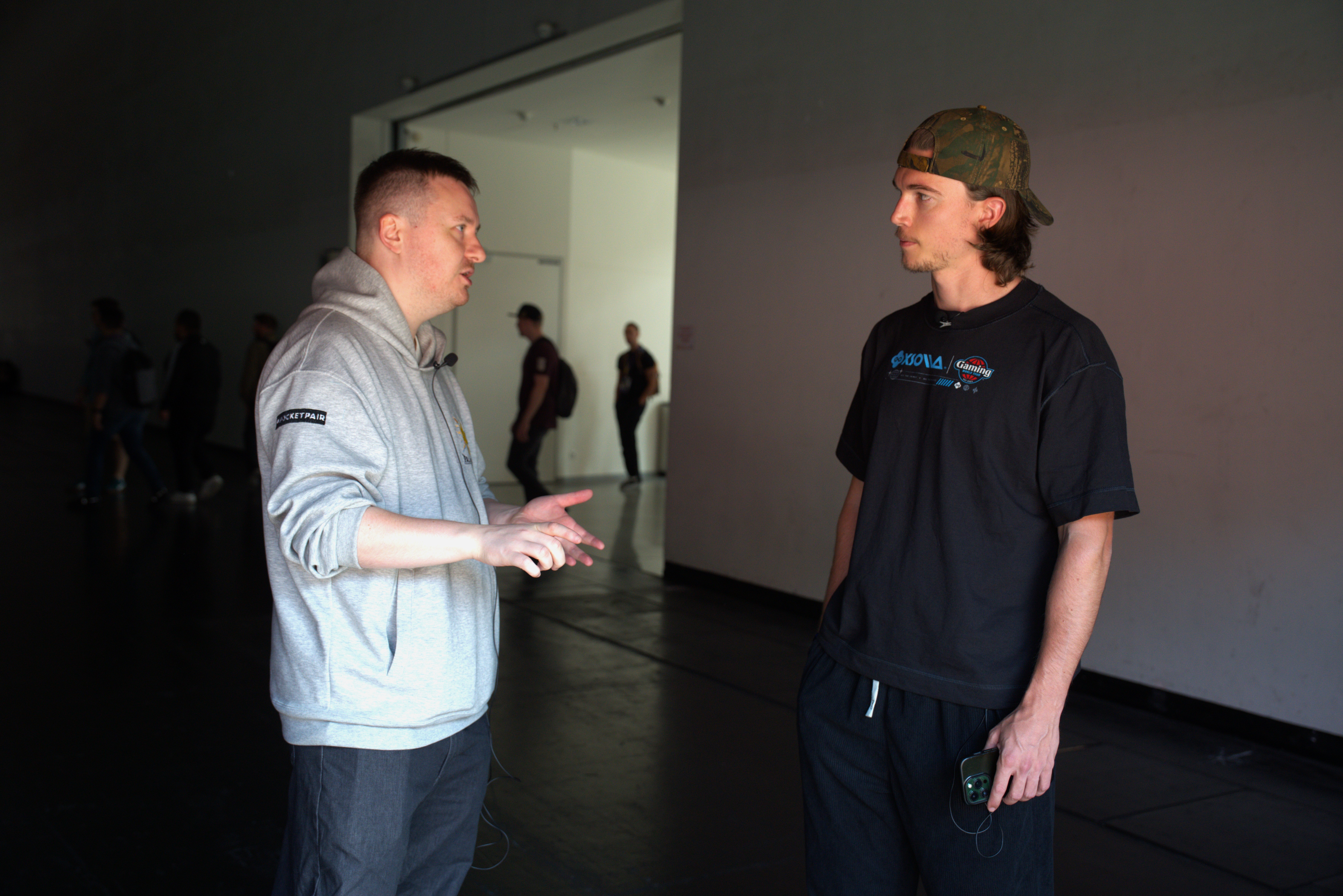
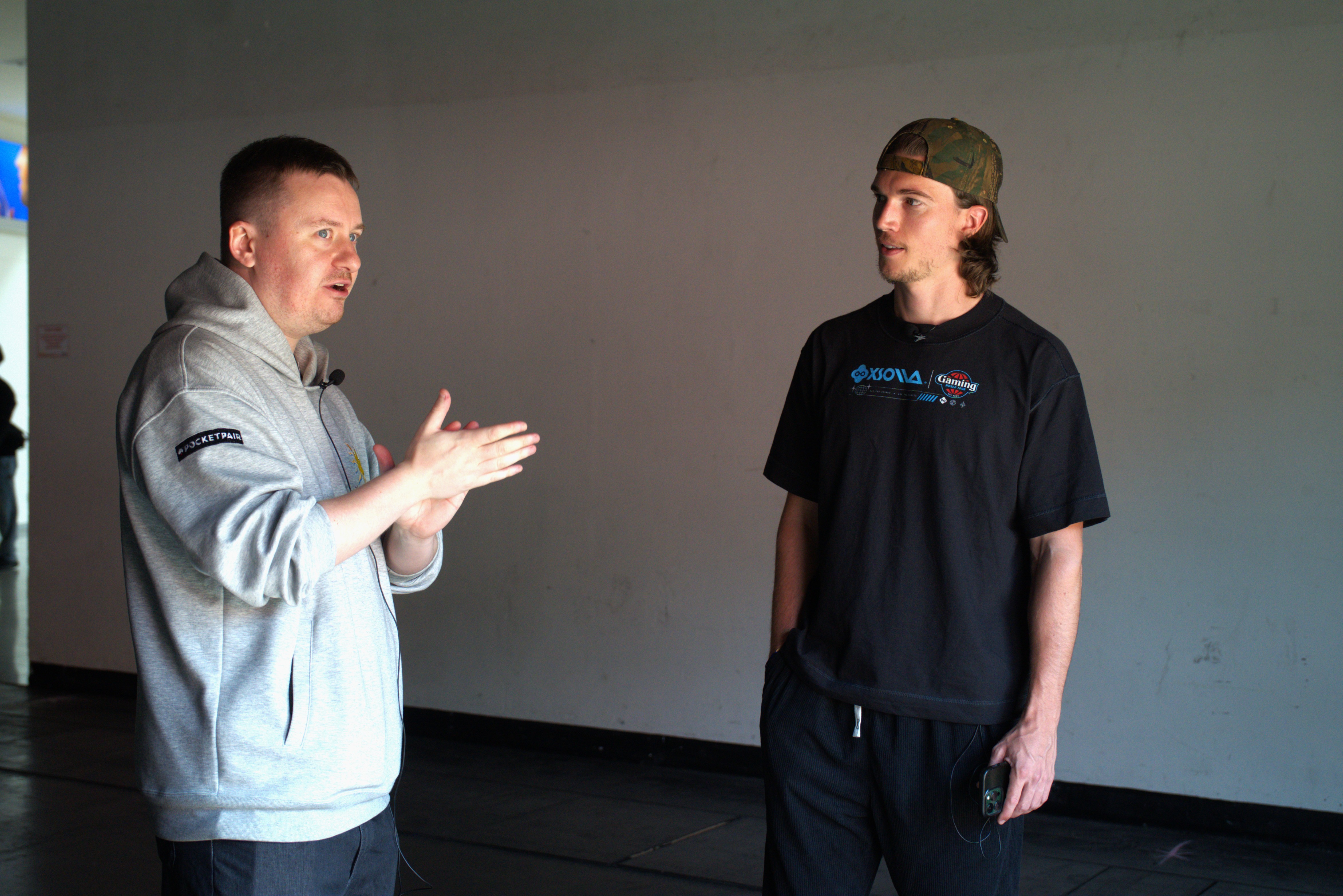
Jake Lucky: Guys, we have a very special one here at Gamescom, someone who made time for us. Bucky, thank you very much.
Bucky: Thank you.
Jake: In case people somehow don't know your name, can you give us a quick introduction about who you are?
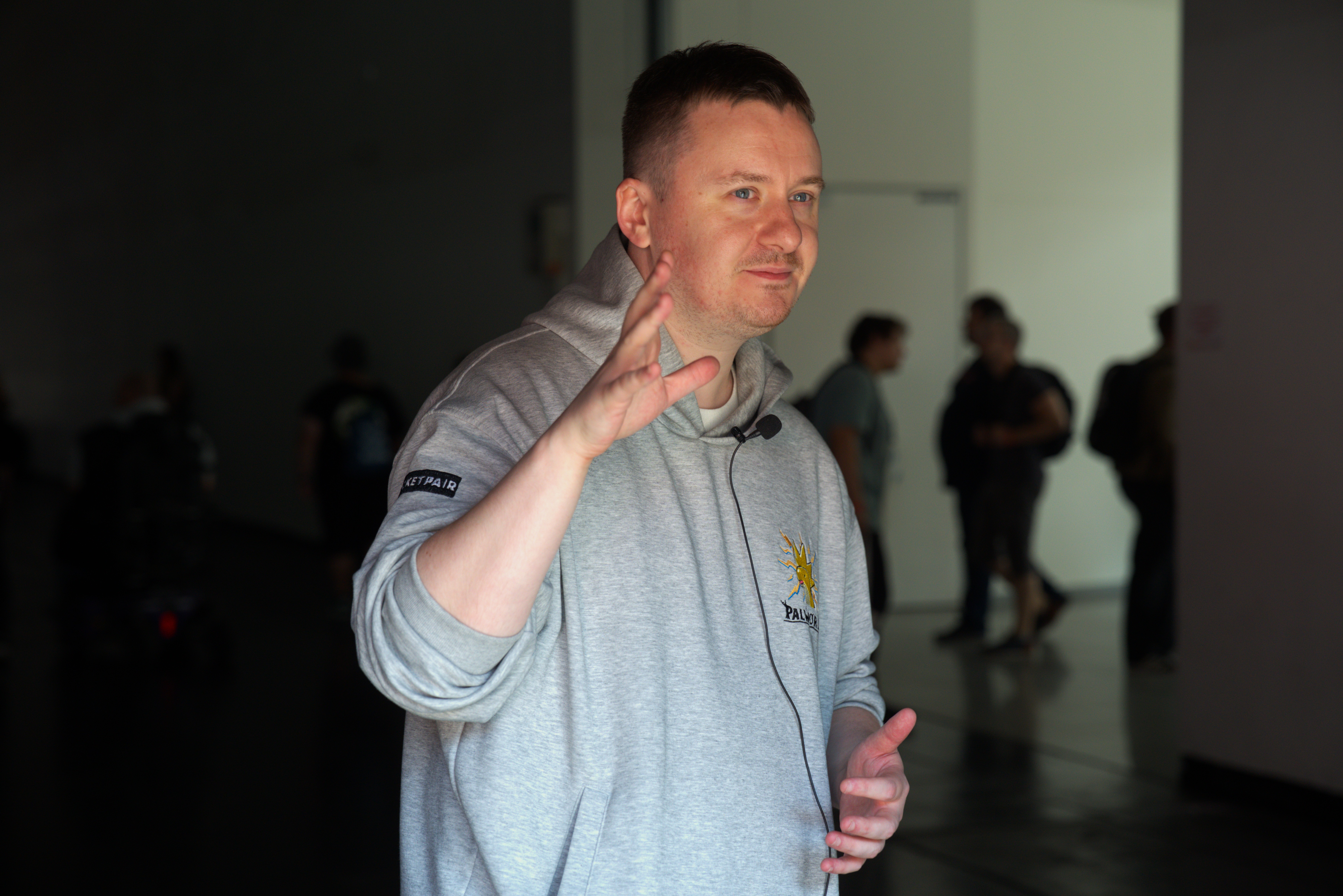
Bucky: Sure. I'm Bucky. I'm the head of publishing and communications at Pocketpair. I am the de facto public face of Palworld for the time being.
Jake: And how does someone eventually find their way to working on Palworld at Pocketpair?
Bucky: I've been with Pocketpair for quite a long time, actually, quite a bit before Palworld—pre-Craftopia days. Craftopia's the last major game. I moved to Japan, did a few odd jobs, did a little bit of localization, a little bit of LQA. And one day near Christmas, actually, I met a very strange little man called Takuro Mizobe, and he said, 'Hey, I've got this company of 10 people. We're making little games.'

Jake: And so you were on the ground floor, before Palworld was even in inception. Can you tell me about the early inklings of when that conversation started?
Bucky: Craftopia is very automation, survival, crafting, and there's a really light element of creature collecting. Craftopia's creatures are grounded in reality, but you could capture a giraffe, and you could make a giraffe run on a wheel for power. I think the idea sparked around that time, and we thought, 'Okay, this could be something cool. Maybe we could spin off with something.' Over a couple of years, it morphed into: What if it wasn't real animals? What if it was creatures? And what if maybe those creatures had their own UIs and their own personalities? Suddenly it became, 'All right, I guess we're making a creature-collecting, automation, survival, crafting game.'
Jake: And so what year would those conversations have turned into something more formative?
Bucky: This would've got pretty serious around 2022. We made a very rough prototype in Unity, and we announced it, and the first trailer was Unity. People were very excited at that time. Then we ran into problems: How we wanted to make the game didn't fit the engine, so we had to scrap everything and start again in Unreal, which is why Palworld went silent after the initial announcement. Then we came back around 2023 with, 'Here's the Unreal version of Palworld.'
Jake: And at what point was a name starting to be tossed around?
Bucky: The name was relatively early. I remember, unfortunately I can't say them here because I'd need approval from my CEO, but there were four or five names that we had. They were all something world-ish. We very early hit on that. Palverse was floating around, maybe in the final top five at some point. But it was always Pal something or something world. We knew that just the play on words with Pal was fun. They're your pals. It's a very fun play on words. And weirdly enough, we went on the English side first, not the Japanese side. But we knew that quite early. It was always Palworld, as far as I can remember, basically.
Jake: At what point after announcing did you guys realize, 'Oh, we have something here that is definitely causing some traction'?
Bucky: Immediately. The whole early Craftopia cycle—Craftopia did very, very well in Japan and China. It really found an incredible audience, but it was never a media pickup game. The greater industry never really noticed it. But that first Palworld trailer was front page IGN, front page PC Gamer. We instantly knew, okay, there might be something here. And then of course our Discord ballooned. It really put a lot of pressure—good pressure—on us to deliver this, which is another motivation toward changing engine. We really had to do this right.
Jake: I was curious what your metric was before the blowup of what a successful game would look like. But it seems it happened so fast that that metric would've been moved right away.
Bucky: It's really hard to think about metrics now, even in hindsight. Palworld's entire history from pre-release, the wishlist era of Palworld, to early access launch, concurrent users—all of these numbers are so surreal, it's hard to even think about them now. It's hard to go, 'Our metrics were two million concurrent players.' 50,000 we would've been jumping around the office, parades. But certainly that first initial announcement did make us reevaluate immediately—okay, this might actually be a bigger project than we anticipated.
Jake: Was there a number at some point, whether it be concurrent players or some other statistic that dropped within a certain time span where you were, 'Oh, whoa. That's an ungodly number'?
Bucky: At early access launch, I remembered it so vividly because we all went to the office that day—we were going to have sushi and wine at the office. The launch was almost immediately 100,000 CCU, which is mind-boggling. Even still today, 2026, that's mind-boggling for a game day one. And then it was literally just Ctrl+R, and then suddenly it's 250,000. 500,000. The panic in the office was palpable. I remember when it hit a million, I was, 'How do you even comprehend these numbers?' Then it was 1.5, two million. And it was around the two million point that we started to say, 'Is this a record?' That's when we tweeted, 'Hey, we're, I think, the second-highest CCU of all time.' Behind PUBG. It's very surreal to think about these things, even now.
Jake: As of now, number three all time on Steam concurrent, which is just insane when you talk about the inception of this idea and not seeing it coming.
Bucky: Okay, there we go.
Jake: Can you talk about the number of people on the team when it came to scaling up to that early release and what it looked like after?
Bucky: When Palworld launched in early access, we were around 30, 35 people full-time and a few contractors. Now, as a company, we're about 110. Over two years, we've tripled in size, basically. Palworld's inception would've been three or four guys. Early prototyping would've been single-digit guys. But by the time we shipped early access, we were about 30. We scaled quite a bit over that time.

Jake: When you guys have that early success, so monumental, and then you realize you need the full release—the 1.0—what's the vibe in the office? What's the boots-on-the-ground vibe?
Bucky: Fear, panic, horror. No. Ironically, when you have that many people playing the game, you don't need to want for feedback at all. You just have such a massive stockpile of feedback. There were so many things we knew we could do. Very quickly, we separated things into: What's realistic for development? What's not realistic? What's possible if we scale up more? And there was a lot of, 'Oh, we could do that if the team got bigger and bigger.' There was a lot of scaling to make things happen.
Very early, we knew that to get to 1.0, we have to hit these—bang, bang, bang. Obviously things happened over that time that changed that flow. We did a collaboration with Terraria. You don't plan, 'Okay, a year from now we're going to do a collab with Terraria.' Those things come about, and then you shift plans. But I think we stuck to the landing. I think 1.0 came out pretty good. We're happy.
Jake: Of those ideas and implementations, was there a mechanic or a certain thing in the game that was difficult during that time up until 1.0—we have to get this done right?
Bucky: Definitely the balance between interacting with your Pals and your Pals doing the work. Everything around base management—we wanted it to be a system that's accessible. If you don't really want to get deep, deep, deep into the automation, you don't have to. Everything should be able to function at a base level. But if you really want to go crazy and make it very intricate, you can.
That was very hard, not only because of the systems on the backend, but also the AI—how they move. The pathfinding is very complex. And also the balance, balancing it in such a way that it's not too easy. You need to reward more casual players, and you need to reward the players who want to min-max stuff. So that's when you get into the idea of, okay, maybe breeding is more for the min-maxers, the hardcore stuff. And then maybe base management, we make it a little more accessible. This is, even today, a constant thing.
Jake: Were there any features, or Pals, that almost didn't make the cut? Any funny stories?
Bucky: There's a graveyard of Pals.
Jake: How big is the graveyard?
Bucky: Huge, huge, huge, huge, huge. On our team, we have a lot of 2D concept artists, and all they do all day is make 2D sketches of Pals—Pal ideas. We vote internally. We've got a special channel on Slack, and they'll post the concept art, and then we'll put one, two, three, four, five rankings, and everyone in the company will vote. That process takes a long time, because then someone is going to make a 3D art version, and sometimes 2D to 3D you're, 'Ah, maybe it doesn't work.' Then you make the model, and there are so many cases where you make the model and you're, 'What? It doesn't...' You might take parts of the Pal, and they get Frankensteined a bit. 'We love this part of the Pal, but this didn't work out.' There are a lot of Pals that didn't make the cut. It just happens.
Jake: Would you say hundreds of Pals in the graveyard?
Bucky: I would say hundreds of 2D concepts—hundreds of rough Pals. Maybe not as many made models, but there are a few. There are a few notorious ones that fans saw in the code.
Jake: Are there any Pals that were just right away unanimous votes across the office?
Bucky: This is going to sound like I've rehearsed it, but I'm being very serious. I think the fastest Pal to go from concept to design to production to modeling to rigging was Sekhmet. It was almost—you've never seen reactions on Slack move that quickly before. It was just, 'Make that one.'
Jake: And you were on that same page?
Bucky: I was, 'Ugh, I know where this is going.' Instant. Sekhmet has been around actually quite a long time. People don't realize how long. We revealed Sekhmet in the Pal Farm trailer. Sekhmet was the only Pal in that trailer that didn't even exist in Palworld.
Jake: Oh, I didn't know that.
Bucky: There was a long time where people were, 'Bring Pal Farm Pals to Palworld.' We were, 'Oh, no, no, Sekhmet is coming,' but we knew Sekhmet would be better served at 1.0. Releasing Sekhmet in Palworld Home Sweet Home would be fun, but I think 1.0 is the right time to drop that bomb on the gamers.
Jake: Was there a Pal whose popularity surprised you, one that you thought would more be in the middle?
Bucky: Controversial—for the record, this is my opinion, not the company's opinion, it's the opinion of me and me only. I really never thought Cattiva would be popular, ever. Cattiva, Chikipi, and Lamball were the trio in the beginning when you wake up on the beach. I was pretty confident Lamball would be popular, and I thought Chikipi and Cattiva would fade into the background. And Chikipi has kind of faded away. But Cattiva is a mascot. Cattiva and Chillet are the mascots of Palworld. And China in particular—Cattiva is everywhere there. There is a bit of regional difference with the Pals. For the company, not so much early Pals. I think we were pretty accurate in how we predicted them. Chillet we knew—Chillet's going to be a thing. But some of the 1.0 Pals we're surprised how popular they are. Snoc, which is a snail, really—the gamers are really into that snail, or slug, whatever you want to call it.
Jake: When it comes to the boss nature of this game, and Pantalas obviously being a big focus here—when do those conversations start and how does the design of all of that come to be? And how long is that process?
Bucky: Immediately. Pantalas is in the very, very, very first Palworld trailer. 2022, Pantalas is there. The whale was one of the longest-running community memes for a long time, literally since inception. Of course, how Pantalas was going to interact with the World Tree—that wasn't necessarily planned day one. That evolved over time. The whole World Tree in general evolved with the game. The initial ideas for the World Tree and how it landed obviously changed over time. Very early, the World Tree was just a tree. The idea of making it its own huge zone came later. But Pantalas was almost day one—this idea of mythical, wouldn't it be cool to have just this stupidly large thing? People want a creature to be stupid big.
Jake: That one segment bug—or was it intended for just one player?
Bucky: It's a bug. It's a bug. It's a bug.
Jake: When it comes to the future of this game, people see endless possibilities for what you guys have done and turned around so quickly in such a big world. You've been asked for some pretty crazy things. What's one of the craziest things people have asked you to try and do?
Bucky: The things that wind me up the most are when people say, 'I want to be able to dig the terrain,' and you're, 'Mate, what you're talking about is Palworld 2. You're not...' These things aren't possible. You're talking about landscape reworks, and, my God, the pathfinding rework would be years of development. This stuff's just not feasible. Please don't ask for terrain digging. It's not happening.
Go to space and stuff, and underwater and stuff—these are all things people ask for. Let's say we're going to do an outer space update—let's say we're going to go crazy—now I didn't say that—first of all, Palworld is one open world, so now you've got to make a second plane. How do you get there? Is it a transition? Do we have to unload this world to load this area? You're talking about years of development. Do you want to wait two years for an update? Or would you rather we do something else? There's a lot to juggle.
Jake: One of the craziest ones I saw was someone basically asking you guys to turn Palworld into No Man's Sky.
Bucky: That's Sean's fault. He's here somewhere.
Jake: Oh, you met up with him?
Bucky: That's Sean's fault. No comment. Sean's a sweetheart, love him to bits. We're both from Ireland—that's where it came together. No comment on any of the No Man's Sky situation. But will Palworld turn into No Man's Sky? No. And I'm sure Sean would also never wish that on anyone.

Jake: When it comes to collaborations—you mentioned Terraria very early on. You guys have obviously been very selective since then. Are there ideas for future collabs in the chamber? Things that people can look forward to?
Bucky: There are ideas, but I would say don't look forward to anything just yet. It's hard. Terraria was a match made in heaven, and they're the nicest guys ever. If you ever get a chance to meet Redigit and those guys, they are what you always dream game developers are. Sometimes you get collab ideas, and the game you think, 'Wow, there's something here,' but the idea never really clicks. And sometimes people are very protective of their games. They might say, 'Oh, we'd love to collab with you, but you can't—we don't want to see our guys working the Palworld factory.' These things happen. That's fine. We get it. We're not going to force it. Sometimes you start a collab and then it fizzles out. Sometimes you break down in contracting. The variables are endless. I wish it was as simple as, 'Hey, I'm a fan of you. You're a fan of me. What can we do?' But at the end of the day, there's business, and there's a lot to consider.
Jake: With the success of early access and the re-success of 1.0, what message do you want to get across for fans who are anxiously awaiting 1.1? How is that going to be different than 1.0?
Bucky: 1.1 is exciting for us at Pocketpair because we're doing something that people have wanted for a long time. We considered it for 1.0, but it would've just pushed the release back too far. Not to be cliche, but this year, something's happening later this year that's a black hole for all other games. We didn't want to go anywhere near the November range with GTA. We're doing something that's very exciting, but it's not big. We're going to start the marketing on this soon, and hopefully we're going to try to articulate this. But it's exciting for the fans. It's not a huge thing. You don't have to restart your game to experience it. Let's call it a soft prologue. Something people want to happen. It's going to be fun. It's going to be cool. I think the fans will love it. But it's not huge. Please don't expect 80 more hours of content. That's all I'll say.
Jake: 1.1 is something you'd never see coming.
Bucky: Please don't expect a 1.0-sized release.
Jake: Was there a rough timeline out there?
Bucky: Nothing we've announced yet. Because we're 100% independent, we don't really have to stick to things. What started as a super small update has grown into, 'And maybe we'll just do this as well.' No timeline just yet, but it won't be super long.
Jake: When it comes to the Palworld universe—Palworld, Palworld Online, Pal Farm, TCG—you guys do seem to be expanding. Is there anything else you can give on the notion of what you guys are working on?
Bucky: We licensed a lot of these things out, so we're actually not juggling that much. Super early, we were, 'Look, let's be honest. We're just city game developers. We don't know anything about this stuff.' So we give it to the experts. There might be some cool things in the works. Someone back home in the Tokyo office is clenching their fists right now.
Jake: Someone really wanted me to ask: Can you give us anything on Pal Farm? What can people expect? Can you give me any line?
Bucky: Pal Farm is in development. The team has grown a lot. I think Pal Farm is going to be a little bit different than what people expect it to be. I saw someone throw around the phrase 'Palworld Stardew Valley,' and I would say not really, actually. It's not going to be as violent as you might think. It is the cozy Palworld, but it definitely has that Palworld tongue-in-cheek to it. It's shaping up very well, and it's very pretty. I think it's a very, very pretty game, which I think people will appreciate.
It's surreal. In Tokyo, in Shinjuku, they booked out the big 3D monitor, and I went to see it one night. There are thousands of people crossing the street. I work on this thing for a long time. I consider this thing my baby. We had nothing to do with that, and there it is. It's a very weird feeling. Even here at Gamescom, there are posters at every entrance. It's very humbling.
I've seen Palworld's development from Unreal Engine cylinders to what it is today. But you see the mobile stuff and the spinoff stuff—you've never seen the development, and suddenly there it is. 'Wow, this is crazy.' It's very humbling.
Jake: What is Pocketpair's publishing mission right now?
Bucky: There are a lot of weird things happening right now in the industry, especially in the West. There are a lot of weird deals going around. Because we don't feel the pressure of a normal publisher—where our entire income relies on signing games that are going to be hits—our income comes from the games we make. So we can wedge ourselves into a place where there are a lot of games right now that are struggling to sign deals that make sense. Some developers sign deals that don't make sense because they have to.
Windrose is the perfect example for me. You look at that game, and just think to yourself: Why did no one want to help those guys? It's mind-boggling. You talk to those guys and hear the deals they were offered, and you're, 'That's stupid. We'd love to help you, and we'll do this? It's fine. It's fine.' Truckful as well—everyone saw that pitch, but everyone made really horrible offers. We want to find that wedge of: We'd love to help you. You don't need to give us 90% of your revenue. It's fine. We're okay. Just help these games get out. That's the mission statement right now.
———
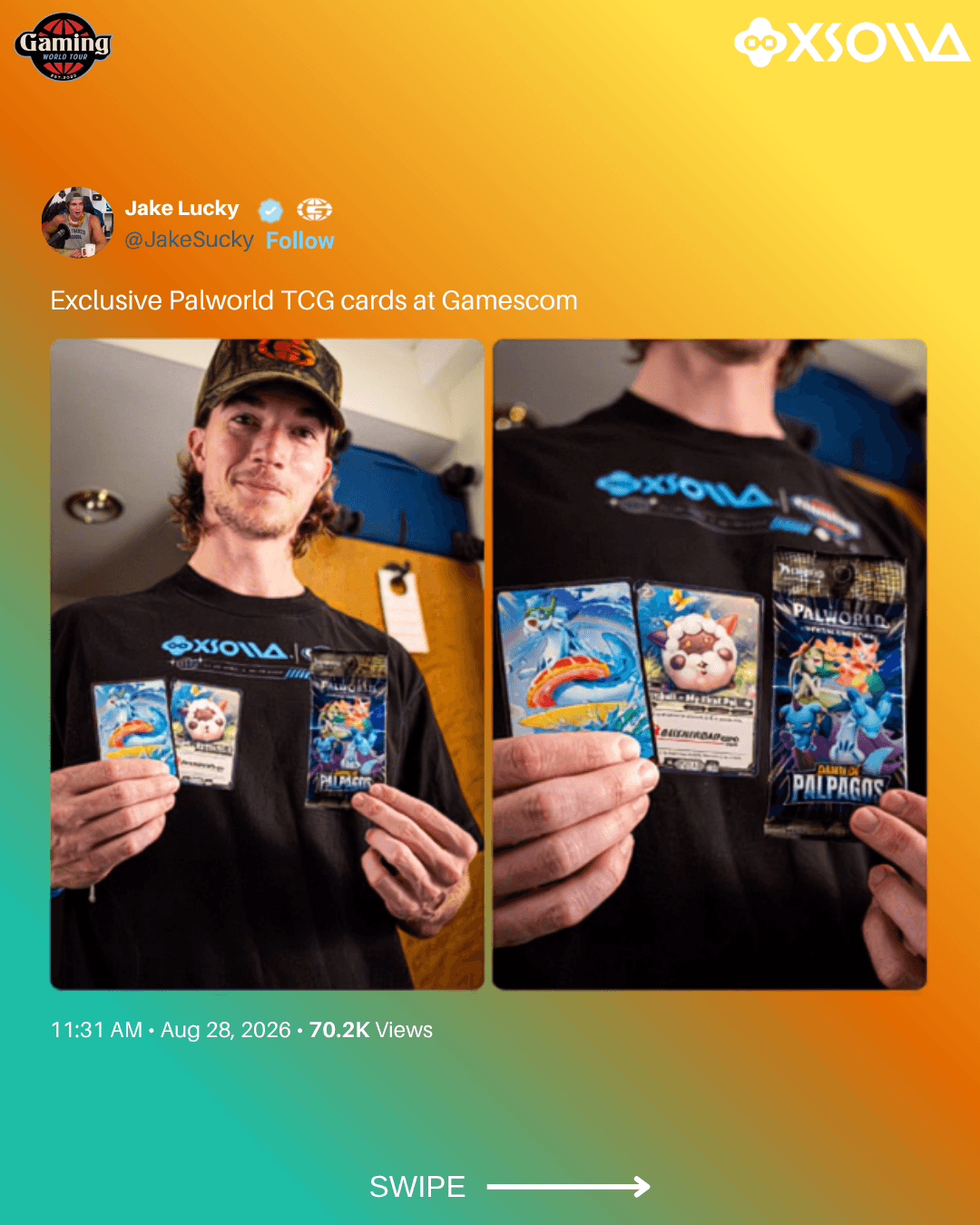
Thanks to Xsolla for sponsoring our Gamescom coverage this year. Xsolla works with developers around the world, giving them tools and support to launch, monetize, and grow their games. This year, Xsolla had a scholarship program that flew 20 indie devs from across the world out to Gamescom, giving them the opportunity to showcase their games, meet the industry, and get their projects in front of more people.
———
This interview has been edited for clarity and length.
AUTHOR
Share this story


