

Inside Xsolla: The Future of Gaming
Justin Barenbaum, SVP of Global Industry Relations and Funding at Xsolla, discusses his accidental entry into gaming, what it really takes to build a successful game, and Xsolla's scholarship program at Gamescom 2026.
Inside Xsolla: Building the Future of Game Development
Jake Lucky: Well, Justin, I would love to kick things off with an introduction in case people don't know about you.
Justin Barenbaum: Sure. I'm Justin Barenbaum, SVP of Global Industry Relations and Funding. It's a really long title to say I basically get to run around the world and try to help countries, developers, and ecosystems succeed.
Jake: And we're all around games. You've been pulled aside all day long talking about games. What was your first entry point into gaming?
Justin: This is gonna be way over the head of a lot of people. I started in 1993 at Capcom, a little Japanese company based in the Bay Area, by accident. I answered an ad in a newspaper back when people had to read newspapers to find jobs. I mailed in a resume and cover letter to a company called GNG Software, which I didn't know at the time was actually owned by Capcom. Nobody knew. Sent in my resume. It was for a retail store manager at a store in Hillsdale Mall in San Mateo, California, which is two miles from my house. For those in kilometers, about four kilometers from my house.
I didn't hear back for a month, and all of a sudden I get a phone call on my answering machine. 'Hi, this is so-and-so from GNG Software. Would you be willing to come in for an interview?' I called them up, set up an interview, drove down, and as I'm driving into the building I see Capcom on the front. GNG was back around the side. And I'm like, 'Oh, that's kind of strange.' One of the first questions I asked was, 'Are you guys Capcom?' 'Yeah, we're actually owned by Capcom.' A lot of people didn't know in the nineties that Capcom owned a chain of retail stores very much like GameStop, and they owned those for several years and then they sold them off. But that's how I got my start.
I answered an ad in the newspaper, went in and interviewed for a job I thought was a retail store job, and then I got offered two. I got offered to work in the retail store, or I got offered to come to corporate and open up a mail order store. The retail store was much closer to my house and I would have made a lot more money because they had a bonus program for retail store managers. But corporate sounded a lot more interesting. So you think about times in your career path, I chose to go to corporate, make less money, have an hour commute versus a ten-minute commute. Being in corporate I was around the CEO and CFO and got to meet the people at Capcom. And over 18 months they started to sell off that division. I was the only employee that was allowed to move over to Capcom. I had to take a demotion in title to customer service rep and started answering phones for Capcom for the first six months. So that was a long-winded way of saying that was my start. Not a 'oh, I went to school for this' story.
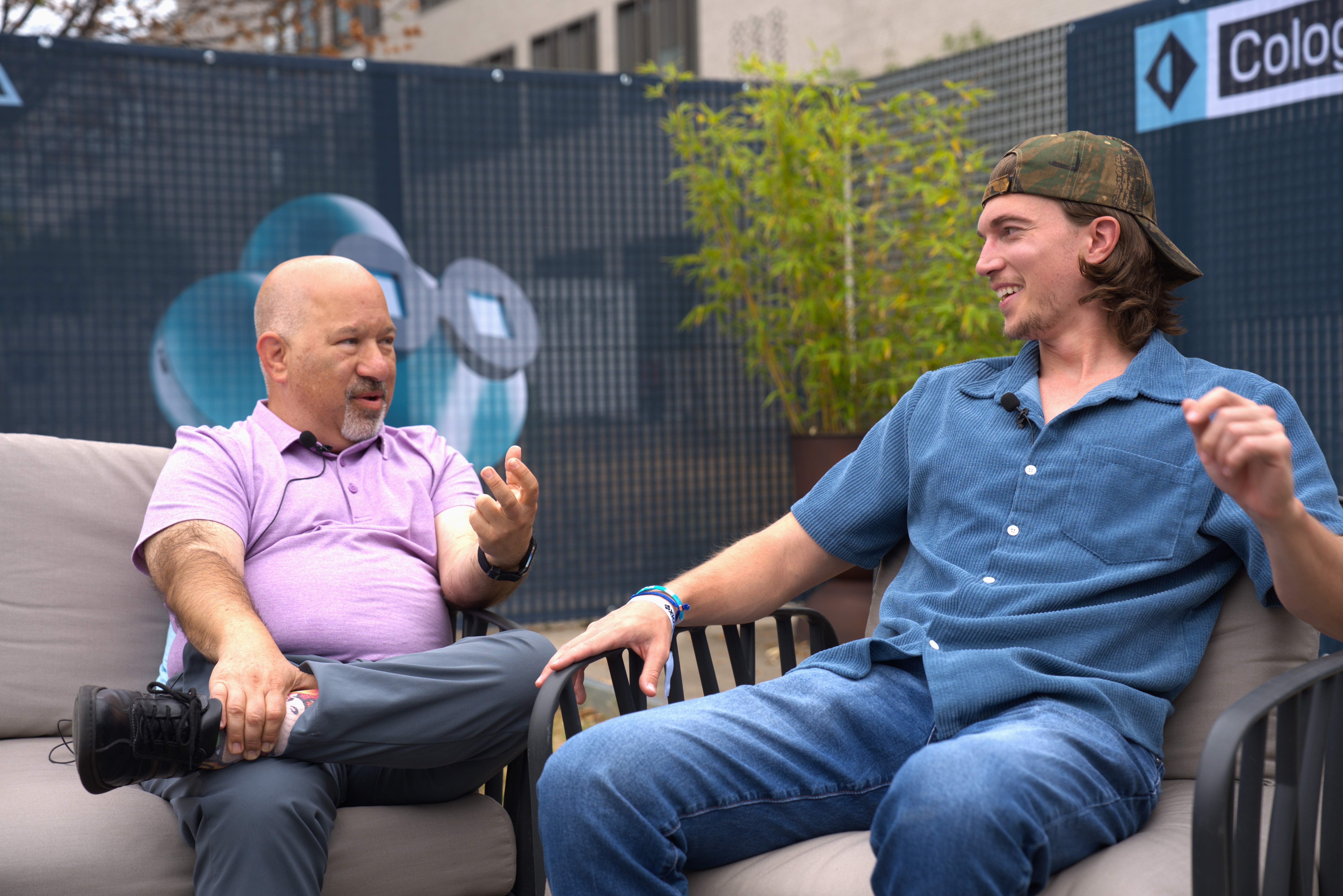
Jake: So how do you find yourself here now? And you don't have to summarize the entire journey.
Justin: Quickly, at Capcom I built a mail order direct sales division and started doing some other things. When I went over to Capcom proper I turned the customer service department from a cost center to a profit center. I started selling merchandise and old instruction manuals. I got a taste for how to generate revenue out of ancillary ideas. Then I left there, did a few other things, ended up at Activision, started doing biz dev, because ultimately everything I did at the time wasn't really called biz dev but it was strategy and business development. Had that career for a long time. Then Capcom again before this. So it was Capcom, Activision, consulting for five or six years, 505 Games, Team17, and then I got hired here by accident.
Jake: And so how would you describe your current role?
Justin: My current role is I'm lucky. I get to travel around the world, talk to governments, talk to studios, talk to anybody and everybody who will listen about ecosystem building, strategy, the business of games. I don't tell people how to program. I give them insights on the business of games and what really happens in the back room when somebody's making a decision on a green light, what we look for, what we don't look for, even secrets about that. Most of the people on a green light committee at a publisher never play the game. Only about half of the people that sign the game ever play it. And then what it's like, the differences between an investor and a publisher, and how to self-publish, not just self-release. So I get to run around the world and try to help everybody. I've got a great job.
Jake: And so what is your interaction between you and devs? What does that look like?
Justin: My team more than me. Our team is named Developer Success. Our job is to try to help developers be better prepared to go out into the world. We're pushing developers out of the nest, but we're trying to teach them to fly first. My team is focused on really that next stage, like how do I take my idea or the game that I've already developed, and how do I turn it into a professionalized thing that might be able to get funding, or that I might actually be able to self-release?
I think the goal sometimes is, everybody wants to be famous, everybody wants the AAA game, everybody wants to create the next GTA. The real success in a creative industry is surviving long enough to get lucky. And if you talk to most of the people behind the big hits, it was the third iteration. It was the third Call of Duty that really blew up. It was the third Assassin's Creed. Nobody even remembered GTA 1 and 2 until GTA III. I'm not saying you can't do that. But I think everybody's so focused on these big swings, they forget what got most of these big studios to where they are, which was really good little games. And so that's what we spend a lot of time on, reminding people of the creative process. It's like the whole iceberg analogy. What you see on top is way different. And so the path everybody thinks success looks like is like this, and we all know the path to success is more like the tumble dry cycle in a dryer.
Jake: And so when it comes to how Xsolla interacts in gaming, if someone comes across the name and doesn't realize they are in gaming, how would you describe what you guys do?
Justin: We sit at the intersection of creativity and fandom. We enable creators to directly transact with their customers. We know that fandom, fan base, they don't want to talk to a platform necessarily. They don't want to talk to a big marketing machine. They want to talk to the people creating the content, whether that's a content creator for YouTube. They want to feel like they have a relationship with them, they want to give them feedback, they want to help them get better. We allow that on the transaction side. So now you're allowing your customer to buy directly from you, and you're actually creating a better relationship, and you have the ability to re-engage that customer, re-market to them, without spending all the money to reacquire them. Ultimately we are a facilitator of direct consumer revenue.
Jake: Or direct to player.
Justin: Direct to player.
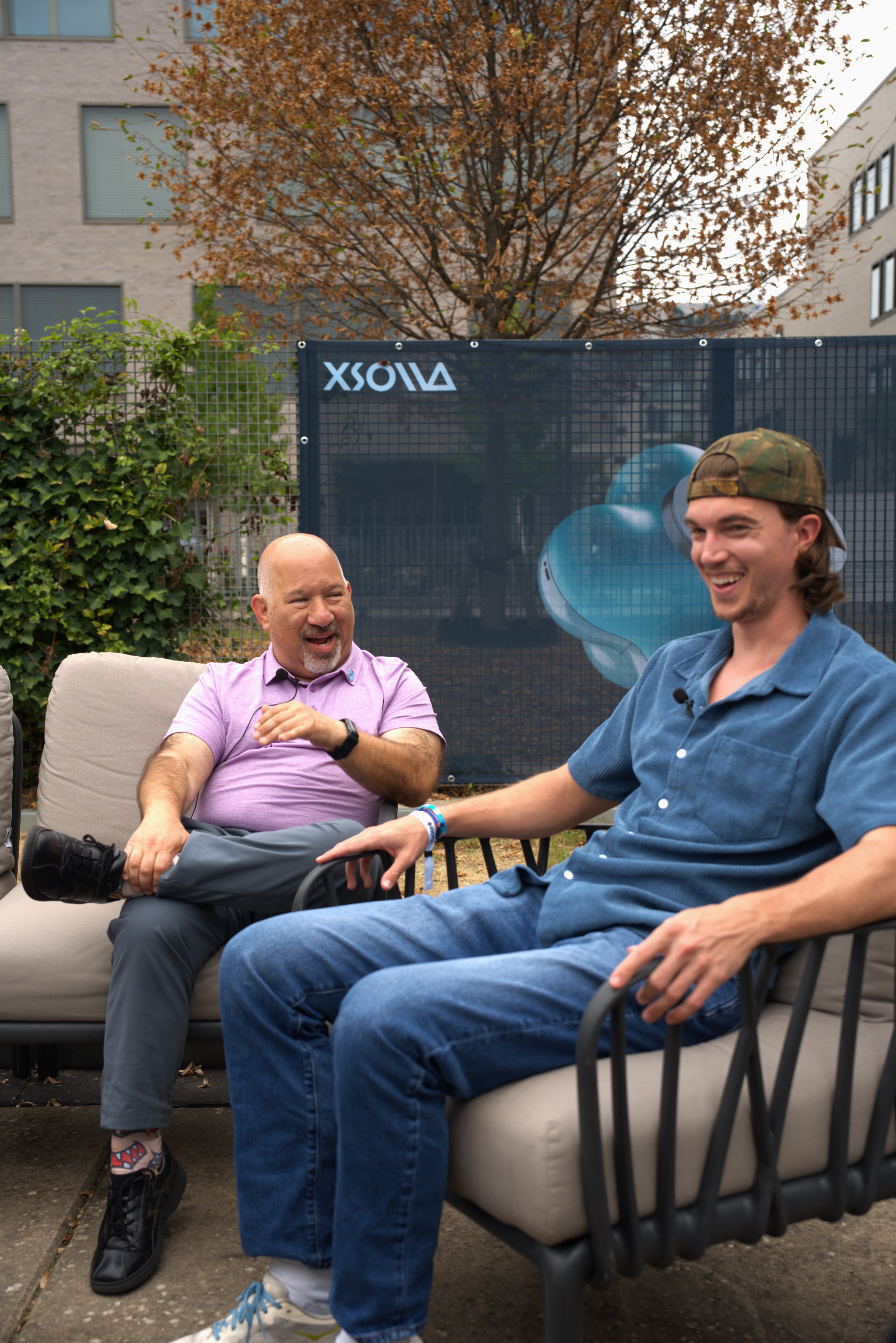
Jake: And part of the reason we're also here is you guys have a scholarship fund, or some other means of funding. If you could elaborate on that.
Justin: Sure. The scholarship program was the brainchild of a collaboration between our marketing team, my team, and a few other people. We saw the need in the industry to give underrepresented places an opportunity, because all the creativity is coming from all over the world now. It used to be isolated in Japan or Canada or the US. Now it's everywhere. You never know where the next big game is going to come from. So for us, the more people from more places who get an opportunity to get exposed to a games conference, the more likelihood that the next great hit could come from somewhere you never heard of before.
The program we set up for this event had 20 scholarship winners, with 13 countries represented, all given a chance to come to Gamescom. My team gave them training on how to go out and get meetings, how to use Meet2Match, how to actually properly conduct a meeting, how to present yourself. We had a little talk this morning and brought in some VIPs, Amir Savat and some other well-known figures in our industry, just for them to interact with and get a chance they never would have had before. Now they will be able to go off to Gamescom proper tomorrow prepared to have productive meetings, and hopefully come away with a deal.
If not, the most important thing you can do is come away with the relationships that you keep a lifetime. And that is the foundation of success for most companies, the relationships you build here that you can take with you when you go somewhere else. Maybe you run into a studio here that has done it before and they can help advise you. We are all in competition, but the thing about this industry I love is everybody wants to help everybody.
Jake: It's a really cool program. We got the chance to talk to several of the devs who partake in it and are here today. I'm more curious to hear what they said about the program.
Justin: So I can learn how we could do more.
Jake: It's very cool to see how excited they have been, because like you said, some of the smaller countries who are less exposed to game development don't have the kind of connections in those countries that they do when they come to a place like Cologne, which is arguably one of the gaming capitals of the world now.
Justin: I think it's probably the epicenter. The original estimate was 350,000. They're now saying four hundred thousand, which I think will make it the largest gaming event in history.
Jake: To see them be so excited for you guys to provide that kind of opportunity was super cool for us, because we also cover a ton of indie devs. To see them be excited just to be here, and all the people they've talked to, and not even realize you guys were also helping them make their own connections and networking. Where do you see the future of that program going?
Justin: That's why I'm so happy to be talking to you guys. Those are the stories that matter. I think those stories could inspire somebody who never thought they could make a game in some country that's never had a successful game, and that may be the next big hit three or four years from now. For me, the idea that great games really can come from anywhere and can be made by almost anybody. It's not as easy as some people think. No creative endeavor is. But why limit yourself because nobody from your country has ever made a game? Just because nobody's done it before doesn't mean you can't. It's that curiosity that builds creativity, that builds success, and it can literally come from anywhere.
Jake: I love that picture and I love where it possibly could go. Even today we were talking to a developer from Azerbaijan. So even that kind of exposure was really cool to see, and I can't wait to see where it expands to, because there are endless amounts of countries who are even just starting game development or very early on in that cycle. And like you said, you never know where the next big game is going to come from.
Justin: And that's what I love about my job. I don't know a lot of companies that would pay somebody like me in a kind of non-direct revenue generating position to run around and try to help everybody else be successful. And I'm not saying that because I'm on camera. The fact that I get to do this for a living is not lost on me.
Jake: For anyone curious, and if you can't give this info it's fine, for anyone who saw the program and was like 'oh wow,' I'm sure you had plenty of applicants, but if someone was interested in trying to apply or get your attention and join in future scholarship programs, how does one stand out amidst this sea of games and get your attention?
Justin: The first and foremost is do your homework. Don't be lazy. There is so much information out there. Get current on the industry. There's gamediscover.co, which puts out data twice a week on what's working, what isn't, the trends on Steam, all of that. Taking the time to educate yourself about the business of games, not just making a game. Taking time to reach out, understand, look at the past scholarship winners, watch their interviews, see what they said, see what they did right. That kind of stuff will go a really long way.
And then also just be willing to not be shy and ask questions. Approach people. Do it professionally. Reach out on LinkedIn. 'I saw your interview, so and so, would you be willing to help me out for a bit?' As long as the approach is right. If you just say 'give me this,' or you just want to connect without context, that doesn't work. Context is king. I think you should just do something different, be creative, have fun. And we will be doing another program like this for GDC with even more scholars.
Jake: I'm excited for that as well.
Jake: Perfect. Justin, thank you for the time. And thank you for what you're doing, showing some of these stories that nobody really gets to see.
Justin: That to me makes me giddy. Thank you.
———
Thanks to Xsolla for sponsoring our Gamescom coverage this year. Xsolla works with developers around the world, giving them tools and support to launch, monetize, and grow their games. This year, Xsolla had a scholarship program that flew 20 indie devs from across the world out to Gamescom, giving them the opportunity to showcase their games, meet the industry, and get their projects in front of more people.
———
This interview has been edited for clarity and length.
AUTHOR
Share this story


